There are two different definitions of the cash loan in banking terminology and in everyday language. Many lenders such as banks use the colloquial definition in communication with their customers and actively advertise consumer loans as cash loans.

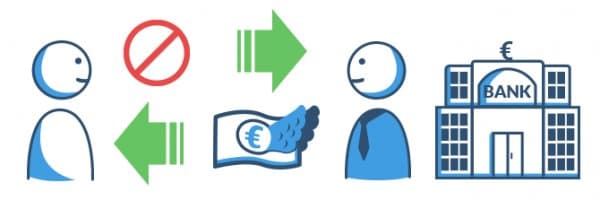
Historically, the cash loan was in fact paid out in cash rather than being transferred to the borrower's current account. It was common for loans to be paid out at the bank counter; alternatively, payment by mail carrier was available. This form of cash loans is rare today; with few exceptions, only the pawnbroker still pays the small amounts of a pawn loan in cash.
Instead, in everyday language the cash loan has become a synonym for a consumer loan. When applying for cash loans, the customer does not have to state the intended purpose; rather, they receive approval for a loan (usually an installment loan) solely on the basis of their creditworthiness.
In the colloquial sense, payouts of loan amounts for cash loans are generally made by transfer to the borrower's bank account; cash payouts at the counter and sending money by post are reserved for a few exceptional cases.
In technical terminology, a cash loan refers to a credit line that the bank customer can use at any time at their discretion. There are various types of cash loans.
Cash loans are also referred to as revolving loans, although this term does not entirely apply to the overdraft facility. Revolving accounts in the narrower sense are always maintained with a debit balance, whereas a current account only has such a balance temporarily. Credit card accounts are also only revolv-ing accounts in the narrower sense if the applicable user agreement excludes holding a positive balance.
The most common types of cash loans
Cash loans certainly include the overdraft facility and the credit limit on the credit card account, since the holder can use these loans at any time after a one-time approval and repay them to the lender at will with few restrictions.
Another popular cash loan is the call loan, which the borrower can access at any time by withdrawing cash or, if structured with a payment card, by paying directly at the checkout.
The overdraft usually does not require a minimum payment, whereas loan types such as call loans and credit card accounts typically include an agreed minimum repayment of the loan.
If the bank only requires a percentage-based minimum repayment, you should always ensure that the overall repayment rate is nevertheless sufficiently high. Otherwise, you may end up paying only the interest on the loan without significantly reducing the principal amount.
Retail customers do not pay availability interest for the various types of cash loans; they only pay interest for the actual use of the funds. For business accounts, however, charging a commitment fee is permitted and common.
Both the amount of the overdraft and the limit for a credit via a credit card depend on the amount of incoming funds into the associated current account. Some banks also grant a credit of a few hundred euros without prior incoming funds. The prerequisite here, too, is the borrower's creditworthiness. Most banks do not issue a credit card at all if there are negative entries in the Schufa.
Advantages of cash loans
The cash loan in the technical sense is convenient for the borrower, as they can access it again at any time after a one-time approval of the credit line. Unlike consumer loans, cash loans in the narrower sense give rise to the compound interest effect, since interest that has already been calculated increases the loan balance and will also accrue interest in the future.