At last nothing stands in the way of buying the car. The new vehicle has been chosen and configured with all sorts of optional extras. Now it’s just a matter of structuring the lease agreement so you can soon drive to customer appointments in the stylish car. The meeting with the customer advisor goes well. The financial terms fit. The down payment is reasonable and the monthly lease payments are manageable. So almost everything would be settled. Then collateral for the vehicle loan comes up. If you are self-employed, your chances are suddenly very poor. Often neither a home nor other bank balances and assets are enough. Lenders want to be extra safe with self-employed borrowers. The risk that the loan will not be repaid is often considered too high. If you can name a guarantor now, however, the loan is practically in your pocket.

To take out a loan, you need collateral. Whether this is sufficient is always decided by the bank on a case-by-case basis. Collateral can be, for example, fixed-term deposit accounts. It can also be proof of income if you are employed. Banks also like to use real estate as security so they can be sure they will get their money back. Sometimes these securities are not enough for the lender. If, for example, you have just started a company or work freelance, it is considerably more difficult to borrow money. For employees, the bank can, in an emergency, have the right to garnish wages. If the borrower can no longer pay, part of the salary will be used immediately to repay the loan. This possibility is not available for the self-employed, for example. People who need money are often forced to name a guarantor. This person undertakes to cover the repayment and costs of the loan if the original borrower can no longer do so.
Who has which role and which obligations in a guarantee is regulated in § 765 des Bürgerlichen Gesetzbuches (BGB). The guarantee is therefore also referred to as a BGB guarantee.
A person "guarantees" that another person will fulfill the obligations of their contract. This person is called the guarantor. The guarantor guarantees that the borrower or debtor, who borrows money for example, will repay that money. Anyone who wants to rent an apartment may also have to name a guarantor. If it is foreseeable that the prospective tenant might have difficulty paying the monthly amount, a landlord may demand a guarantee declaration. A guarantee helps debtors when their creditworthiness according to a Schufa report is not the best. With the help of a guarantor, they can often still rent an apartment or borrow a necessary sum of money.
A guarantee is not satisfied by the guarantor merely giving their word that the contract will be honored. In an emergency, the guarantor steps into the borrower’s shoes. They are liable with their entire assets and must, if necessary, pay the monthly installments. They thus assume the position of the principal debtor.
What is a guarantor? Who can guarantee?
In a classic western there is often a figure who helps ensure that a pursued person faces their avenger and thus their fate. This comparison translates well to a guarantor. The guarantor ensures that pursuer and avenger meet. Otherwise the guarantor would also be held to account.
A guarantor is therefore a person who vouches for another person’s credibility. They agree to be jointly liable with the debtor to ensure that the debtor can meet their obligations — that is, that they repay the borrowed money. If the debtor cannot, the guarantor steps in and must repay the debt and the accrued interest. The only prerequisite a guarantor must meet is adulthood. A guarantee can also be distributed among several people. So not only a single guarantor can assume responsibility but several can.
How is a guarantee structured?
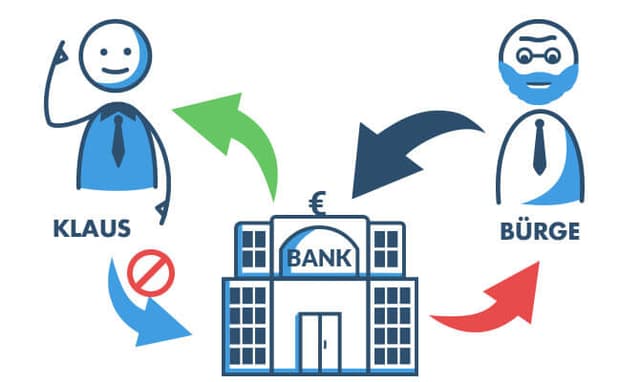
A guarantee is a unilateral contract. The guarantor has obligations toward the lender (the creditor). From this contract, however, the guarantor has no rights. This is in contrast to a loan agreement, where the bank (creditor) provides a customer (debtor) with money for a certain period. For providing the loan amount the bank receives interest. It also receives the lent money back at the agreed time. In a loan agreement both parties therefore have both rights and obligations.
The guarantee agreement must always be put in writing. How high is the guarantee amount? What is the nature of the primary debt? Who is the creditor? The written guarantee declaration must record these and, in general, all essential features of the guarantee.
A corresponding document that exists only online or as an e-mail would not be binding and therefore invalid. There is one exception: an authorized merchant (Vollkaufmann) can, under certain circumstances, give a verbal guarantee if the guarantee concerns a commercial transaction for them. For non-merchants a guarantee can be a self-debtor guarantee (selbstschuldnerisch), for a merchant every guarantee is self-debtor in nature. That means they do not have the right to the defense of prior enforcement (Einrede der Vorausklage). This in turn means a guarantor can refuse payments to the credit institution as long as enforcement against the principal debtor has not been unsuccessful. In a self-debtor guarantee this option does not exist.
Form of the guarantee — briefly:
- Guarantee declaration only in writing
- Guarantee declaration must list all essential characteristics
- Verbal guarantee possible for an authorized merchant under certain conditions
What is a "guarantee on first demand"?
The guarantee on first demand is a special form of guarantee. While the legal rules for guarantees are laid down in the BGB, there is no statutory regulation for the "guarantee on first demand". It has developed and established itself through the debtor’s freedom of contract. A guarantee on first demand means the guarantor waives the defense of prior enforcement (Einrede der Vorausklage). That means they can be called in immediately by the creditor. They must therefore pay immediately when the creditor demands it. However, the creditor must prove that their claims are legitimate. Otherwise the guarantor has the opportunity to reclaim the money paid through a recovery process. For the lender this form of guarantee has the advantage that they receive money in the shortest possible time. As with the self-debtor guarantee that waives defenses, the guarantee on demand is associated with greater disadvantages for the guarantor, since they must pay immediately. No checking is carried out to see whether the principal debtor might still raise liquid funds to service the loan.
Types of guarantees — What different types of guarantees exist?
Now it has happened: the friend or partner for whom you signed as guarantor can no longer pay the rent. When do I have to step in and take over the monthly payments? Are there certain deadlines or conditions for that? Yes, there are. Guarantees can take various forms. Each form brings different liabilities, rights and obligations. Generally, guarantees can be divided into the failure (Ausfall)bürgschaft and the self-debtor (selbstschuldnerische) guarantee. People also often talk about global guarantees, joint guarantees and maximum amount guarantees (Höchstbetragsbürgschaft). Some also distinguish ordinary guarantee, co-guarantee and time-limited guarantee. At first glance there are quite a few types of guarantees. Who can keep track of so many? Let’s try here to give an overview of the different types of guarantees.
The failure guarantee (Ausfallbürgschaft)
"Be sure who you bind yourself to." This saying applies not only to those wanting to marry but also to financial matters. Trust is the foundation of everything. Whoever guarantees trusts. How can someone nevertheless be reasonably sure that they will not lose all their possessions because they signed a guarantee declaration and then have to step in for a friend or partner who is no longer able to pay?

The safest variant for a guarantor is the failure guarantee. It is the legally usual form of guarantee. It is also referred to as the "ordinary guarantee" (§ 765 BGB).
Don't worry: the creditor may not immediately turn to the guarantor if the debtor suddenly stops making the instalments. A guarantor only has to step in and pay when all possibilities have been played out and exhausted to obtain the money from the primary debtor.
What must the lender do? They must sue to assert their claims. They must litigate against the debtor until enforcement (Zwangsvollstreckung) occurs. Only if this does not bring them their money can they approach the guarantor. Only at that point does the guarantor step in.
However, it is sufficient that enforcement has been reached. It need not have been carried out. If the lender can prove that they have initiated all steps and that all other securities have already been realized, then they can turn to the guarantor.
If the loss was caused by the principal debtor’s own fault — for example the debtor admits it is their fault they can no longer pay — the guarantor is not liable.
When do guarantee banks step in?

What happens if instalments are no longer paid? Does the creditor (the lending institution) have to bear the costs? Does the bank have to accept the lent money as a loss? If a customer can no longer meet their credit obligations and all other securities have been called upon to enable the payments, and if all that fails, then a guarantee bank (Bürgschaftsbank) assumes the failure guarantee. In this case it is called a modified failure guarantee. The lending institution receives its money. The principal debtor must now pay the guarantee bank. In such a case the debt relationship transfers to the guarantee bank.
Modified failure guarantee

When is the point reached where someone can truly no longer pay? When does the default occur? In a so-called modified failure guarantee this can already be defined in advance.
Is payment still missing three months after the loan maturity? In this case the creditor waits three months before taking further steps to recover their money. As a reference date, lenders also commonly set the point at which insolvency proceedings are opened against the principal debtor.
The modified failure guarantee is used, for example, when cities and municipalities act as guarantors — i.e. public authorities. The same applies to guarantee banks and credit guarantee associations.
In all cases: first all other securities are examined and used to settle the debt. If someone owns a house or an apartment — that is, real estate — they must expect foreclosure. Machines and vehicles are also forcibly sold to cover the costs. Are the debts thus settled? Great. Is there a remaining balance? Then the failure guarantor must cover this amount.
The self-debtor guarantee (Selbstschuldnerische Bürgschaft)
Is the principal debtor still solvent? But he or she has missed one, two or three instalments? Then the lending institution can also claim these amounts from the guarantor.
In a self-debtor guarantee the debtor and the guarantor are equally liable. It is irrelevant whether the principal debtor could in principle still pay the instalments themselves. The guarantor must then demand their money from the debtor.
Is a self-debtor guarantee safer? For the creditor side this form of guarantee provides greater security. For the guarantor, however, the self-debtor guarantee involves more risk.

Difference between a self-debtor guarantee and an ordinary guarantee
If you are asked to pay, remain calm. Are the payment requests really justified? First, it should be checked whether all options of the borrower have really been exhausted to still pay the amounts due. The guarantor can, for example, have a court determine whether the principal debtor still has assets that could be used to settle the debts. Only when all legal remedies have been exhausted does the guarantor have to pay their share.
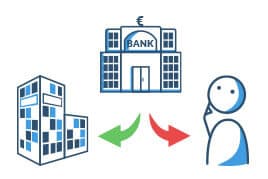
Legally this is called the "Einrede der Vorausklage" (defense of prior enforcement). This is possible with the ordinary guarantee. It is not possible with the self-debtor guarantee. The latter forces the guarantor to act immediately if the principal debtor is insolvent. There is no delay. If the guarantor refuses to pay in an emergency, the creditor can apply for enforcement.
However, the guarantee contract must clearly state the waiver of this defense. The contract must contain an appropriate clause. Everything must be in writing. Because as with the ordinary guarantee: a verbal agreement is not legally binding and therefore not valid.
Where is the self-debtor guarantee used?
If the creditor doubts that their principal debtor can really pay regularly and reliably, if they must fear they will not get their money back, and if the default risk the bank or lending institution calculates is very high, they will insist on a self-debtor guarantee. Which loan agreements does this concern? With this a lender can secure virtually any loan.
Rent guarantee — When may a landlord demand a guarantor?
The self-debtor form is frequently used in the context of a tenancy guarantee. Landlords today often secure themselves with this type of guarantee to ensure the rent is paid on time. This is the case when the landlord assumes the prospective tenant’s financial situation may not be sufficient to pay the rent regularly and on time. For example, students usually do not have a fixed income. If a student or several students want to rent an apartment, a self-debtor guarantee secures the landlord against default of monthly rent payments. Usually the parents of the tenants are involved as guarantors.
What is the difference between a guarantee and a second signature on the lease?

Guarantee or second signature on the lease? Be careful if a landlord insists that the guarantor also sign the lease. The guarantor is only responsible for ensuring the rent is paid punctually and regularly. Anyone who signs the lease, by contrast, is then also responsible for all the obligations the tenant has. In addition, that person must also sign a termination if the actual tenant wants to move out. Only when both tenants sign the termination is it effective.
Maximum amount guarantee (Höchstbetragsbürgschaft)

To limit liability in a self-debtor guarantee, a guarantor can set a maximum amount in the contract. This is the amount for which they are liable at most. If such a clause exists, it is called a maximum amount guarantee. In some general terms and conditions this amount may include, in addition to the claims and accrued interest, commissions and other costs. Anyone who wants to guarantee should note this or ask about it before signing the guarantee contract.
Time-limited guarantee
"Until death do us part..." What applies in marriage can sometimes also apply to a guarantee. However, a guarantor can limit their willingness to be liable in time. A deadline or date is recorded in the guarantee contract. Only until that date must the guarantor be liable if the principal debtor defaults. Afterwards no longer. Once this deadline has passed, the guarantor can no longer be held liable under the guarantee and does not have to settle the original borrower’s debts. A "time-limited guarantee" is also spoken of when a guarantor is only liable for debts of the borrower that arose within the period defined in the contract.
Partial guarantee — one guarantor or several?

It does not always have to be a single guarantor. If you want to distribute responsibility among several people, you can do so. A guarantee contract can name multiple people. Co-guarantors are liable in equal shares for the borrower's default. Or the self-debtor guarantee can be divided proportionally among individual persons. In that case the share of the guarantee must be assigned exactly to the individual persons and stated in the contract.
Liability in a self-debtor guarantee
Is a guarantor responsible for all debts of the original contracting party or borrower? Concerns are understandable. Whoever enters into a guarantee is liable with their entire assets. Do they have to stand in for all debts the debtor/tenant/borrower has accumulated? Don't worry, that's not the case. Yes, as a guarantor you are liable with your assets, including your personal assets. And no, you are not responsible for all debts of the contracting partner. The self-debtor guarantee applies only to a specific contractual object. That is, for example, the monthly rent in a rental guarantee. For a loan it covers the loan amount and the interest for its provision.
The self-debtor guarantee with waiver of defenses
Sometimes the self-debtor guarantee contract contains an agreement whereby the right to raise defenses is waived. This is the strictest and most severe form of guarantee. Banks and lending institutions especially like to secure themselves with this form. It states that a guarantor must be liable in any case. Normally the debtor has certain "defenses".
Defenses of the guarantor may include agreements that the guarantee only applies under certain conditions. Only when these conditions occur does the guarantor become liable for the debt. Postponement, statute of limitations or the right to retain an amount are for example points the principal debtor can assert against the creditor. The guarantor can also raise these defenses.
The defense of prior enforcement (Einrede der Vorausklage) is excluded from the outset in a self-debtor guarantee. A guarantor cannot insist that the creditor must first exhaust all options to compel the principal debtor to pay.
If the principal debtor is insolvent and there is a self-debtor guarantee with waiver of defenses, then the guarantor must immediately step in.
What does accession (Akzessorietät) mean?
Akzessorietät means: a right exists before another and a subordinate right depends on the existence of a main right. Applied to a guarantee it means:
The obligation from a guarantee depends on the claim it is intended to secure. The guarantor is therefore only obliged as long as the principal debtor is repaying the loan.
If the guarantor has stepped in for the principal debtor — i.e. has met their obligation to the creditor and paid the necessary instalments and discharged the loan — then the claims that the creditor previously had against the debtor are transferred to the guarantor. They pass to the guarantor. Do other accessory securities such as a mortgage or a lien exist? These too pass from the creditor to the guarantor.
Non-accessory securities such as assignments of claims for security or transfer of ownership as security are not automatically transferred by the original creditor to the guarantor. However, the guarantor can demand this.
What to consider with a guarantee
Is a guarantee recorded with Schufa?

Anyone who plans to take out a loan themselves in the foreseeable future needs a good rating with the Schutzgemeinschaft für allgemeine Kreditsicherung (Schufa). Only then is a person considered creditworthy. Certain entries worsen this scoring value. This can happen without the person really noticing. An invoice was not paid? A reminder was overlooked and the account was garnished? These incidents feed into the credit assessment. Loan guarantees are also included in the calculation of one’s own Schufa score. This applies even though the guarantor is not the borrower. This can quickly turn into a disadvantage. If the guarantor later wants to apply for a loan themselves, the bank checks Schufa. Depending on the rest of the financial situation, the lending institution may reject the application. A guarantee is a contingent liability. Schufa treats it like a loan because the bank takes a risk. If the principal debtor can no longer pay their instalments, the guarantor must step in and cover the repayment instalments and interest for the loan.
When are guarantees not lawful? When is a guarantee considered immoral (sittenwidrig)?
The rules for a guarantee are laid down in the Bürgerliches Gesetzbuch (BGB). If, for example, the principal debtor and guarantor are related or married, a guarantee can be immoral under certain conditions. This is the case if the principal debtor’s loan would impose too great a financial burden on the guarantor and the guarantor would be financially overwhelmed.
Guarantee overwhelms the guarantor’s financial means
Does being married mean joint liability? Banks can propose one spouse as guarantor when granting a loan. This co-liability variant is legally acceptable if the spouse can actually settle the debt. This is especially true if one spouse guarantees a loan that does not benefit them personally. If within five years one cannot repay a quarter of the guaranteed amount, for example because they have no own income, then this guarantee is immoral. It must be realistically possible that the guarantor can pay the instalments and interest. That is why a reputable lending institution always also checks the guarantor’s financial circumstances.
Downplaying the consequences of liability of the guarantee
"Oh, that's just a formality. It won't come to you having to assume the payments. It's no big deal." If someone is persuaded to give a guarantee with such or similar words, the guarantee is being downplayed. The person who is to co-liable for a friend or partner is being deceived. If a guarantee is concluded in this way, it is invalid. However, in an emergency, if the guarantor then actually has to step in and pay, the guarantor must prove that they were told something false when signing the contract.
How can I get out of a guarantee again? When does a guarantee expire?
Whoever signs a contract also bears responsibility. That naturally also applies to a guarantee contract. A loan guarantee runs until the principal debtor has repaid their loan.
Are there ways for a guarantee to cease before expiry?
A guarantee ends when …
- the debt has been paid off. That is the case when the loan has been repaid in full, including the interest for its provision.
- the obligations and debts of the original borrower are taken over by another person. In this case the guarantee does not automatically transfer to that new principal debtor.
- the principal debtor dies and the main debt passes to the guarantor as an heir.
- the contract stipulates that the guarantor may terminate it under certain conditions. An example would be a significant deterioration in the principal debtor’s financial and asset situation.
- a right of withdrawal is granted in the guarantee contract and the guarantor exercises it.
- the guarantee was agreed from the outset for a specified period and this is fixed in the contract.
- the creditor waives their right.
Is a guarantee inherited?
"That has nothing to do with me? My father signed this guarantee, not me. And he is deceased." What sounds logical and understandable is unfortunately not so simple under the law. If you assume the guarantee ends with the death of the guarantor, you are mistaken. Guarantee contracts are inherited — with all agreements and obligations. If the contract provides, an heir can terminate it. If the conditions and obligations of the guarantee are unreasonable for the new guarantor, there is usually also the possibility to terminate the guarantee contract.
Guarantee banks
What is a guarantee bank (Bürgschaftsbank)?
Especially founders and future entrepreneurs know: obtaining a loan for a business start-up is extremely difficult. Many banks do not want to take the risk of failure that starting a business inevitably involves. This is particularly true when no collateral is available. A business idea can be as unique and extraordinary as you like — it doesn’t help. Start-ups are not simply lent money. Yet sufficient start-up capital is the basis for starting a business. Guarantee banks help in this case.
Young start-ups that can show hardly any collateral and little capital are given the chance by guarantee banks to bring their company to market.
Guarantee banks are privately organized. These development banks are supported by the state and aim to help self-employed persons, freelancers and commercial enterprises with loan or equity financing. Generally each federal state has its own guarantee bank.
Lenders must secure themselves when providing loans. If collateral is missing, a guarantee bank helps. If it grants a guarantee, a bank assesses this as full security. Guarantee banks, in turn, receive re-guarantees from the federal government and the states. Each federal state typically has its own guarantee bank.

Guarantee via the guarantee bank
The loan security via the guarantee bank is applied for by the lending institution. First it is checked whether the founder’s project can actually be supported. The business plan of the future company must be available for this.
How high is the guarantee at the guarantee bank?
Does the guarantee bank secure the entire requested loan amount? No. A guarantee bank limits liability for commercial risk to 70 up to a maximum of 80 percent of the investment volume. The remaining 20 percent risk is borne by the lending institution itself.
When are guarantees from the guarantee bank possible?
The beginning is always the hardest. That is why guarantee banks support start-ups. But what happens if a young company expands? If it wants to bring an exceptional business idea to market? Can the project be supported? For this the guidelines must be reviewed taking into account EU funding principles (SME criteria). Are these met? Excellent — in that case the guarantee bank can also act as security. Guarantees can be applied for as often as needed until the maximum total amount of one million euros is reached. No more is possible. If ideas and proposals are not eligible for support, the guarantee bank does not assume the loan guarantee. Is the company to be restructured? Or is an existing loan to be refinanced? In these cases too, the guarantee bank does not act as guarantor.
Guarantee without a bank (BoB)

Sometimes things don’t gel with your own bank. Views are too different. You don’t reach agreement and the loan is not granted.
Founders then look for alternative ways to obtain the loan they need to start. One option is to apply for a guarantee from a guarantee bank without involving the house bank. The program "Bürgschaft ohne Bank" (BoB) was developed for this. Here prospective entrepreneurs can directly contact one of the regional guarantee banks — provided it participates in the BoB program. Most guarantee banks in Germany offer the program. If a guarantee bank is convinced that a start-up idea has a chance of success, it provides the necessary security. With the guarantee commitment from the guarantee bank, founders then find it easier to find a bank as a financing partner. This also applies to prospective lawyers, doctors, engineers, tax advisors or coaches and trainers — in short to self-employed persons and freelancers.
Guarantee banks want to promote the Mittelstand. Therefore there is also the chance for existing companies to obtain a guarantee commitment from the guarantee bank.
If they meet the following conditions:
- It concerns a small or medium-sized enterprise, freelancer or self-employed person.
- Existing debts are not higher than EUR 500,000.
- The company is profitable; sales and earnings are sufficient.
- Positive equity is present.
- The loan requirement is between EUR 50,000 and EUR 500,000.
The idea, strategy and planned measures are reviewed. If the start-up receives the certification and the guarantee, it can appear more confident in negotiations with lenders thanks to this security. As a rule, companies then receive the desired loan approval relatively quickly.
Can the guarantee bank guarantee every kind of loan or credit?
Whether it is a loan guarantee or the security of a subsidized loan, whether an overdraft (Kontokorrent) or leasing financing — the guarantee bank can provide a guarantee for these.
Alternatives to a guarantee
Are there alternatives to a guarantee?
Lenders usually find that other available securities such as fixed-term deposit accounts, savings or real estate are not sufficient to grant a loan. As an alternative and for security a guarantee is then sometimes the only option. On the other hand, a guarantee within the family and between spouses is always difficult. It is usually only approved if certain prerequisites are met. Are there other ways to obtain a loan then?

One possibility is to apply for a joint loan with two people. It doesn’t matter what relationship the borrower has with the second person. Who with whom — whether married, friends, or nothing of the sort — is up to the applicant alone.
If a loan is taken out jointly with one or more other people, costs are of course saved. Often the loan interest is lower in this case. This is especially true when the interest rate depends on creditworthiness and one of the two borrowers is assessed as having very good repayment ability. Thus it is possible for consumers with lower income to obtain a loan without having to name a guarantor.
If one borrower unexpectedly cannot pay, the bank can access the other contractual partner and collect the instalment there. Both borrowers are thus equally obliged to repay the debt. Each borrower is responsible for the other because the bank can fall back on the other in the event of default.
The express guarantee
What is an express guarantee?
Sometimes it has to be quick. Very quick. And even quicker. Too many customers have recently not paid their invoices? Claims keep running. Employees need to be paid. Sometimes you simply need money very quickly. Often these are not even large amounts. And precisely those are sometimes the hardest to get from banks. Small and medium-sized enterprises know this. With an express guarantee the chance that lenders grant a short-term loan increases.
Here too certain criteria must be met for the express guarantee to be possible:
- Company has existed for at least three years
- Positive equity in the latest annual accounts
- Debt service capacity is given
- Positive profit and loss result (at least EUR 1 profit)
- No negative information about the company at the house bank
Quick and simple approval

Simple conditions, high transparency and extremely fast approval — these are the differences of the express guarantee compared with the classic guarantee and the guarantee without a bank. Also, the guarantee is only rarely rejected. If the prescribed conditions are met, the guarantee bank also checks the credit index with Creditreform. If the required documents are complete at the guarantee bank, it takes one to three days at most for the guarantee bank’s commitment for the express guarantee to be available to the applicant.
However, there are exceptions. Not every company and especially not from every industry can apply for the express guarantee.
Excluded, for example, are start-ups. Here the guarantee bank needs significantly more information that must be checked more intensively. Companies currently in financial difficulties will also not benefit from the express guarantee.
The purpose of the loan matters for the express guarantee. If a loan is to be used for restructuring the company, to refinance existing loans, or to finance losses, this is excluded from the outset. Guarantee banks generally exclude these purposes. An exception applies if vehicles are to be purchased or leased for a transport company (road transport). Companies in agriculture, fisheries and aquaculture do not receive an express guarantee.
Because the amounts for express guarantees are relatively limited compared with classic guarantees, banks waive business plans and expert statements from chambers or associations here. However, the managing partner is liable up to the loan amount. If there are several partners, liability is distributed accordingly. In addition, the guarantee bank requires a term life insurance in the amount of the loan.
Advantages of the express guarantee
Anyone who wants to be — and above all remain — competitive usually needs money. Sometimes quickly. Growth and innovation are decisive. For large companies this is not a problem; for small and medium-sized enterprises it is. The express guarantee helps existing companies, freelancers and self-employed people obtain smaller loans more quickly. With a commitment from the guarantee bank, house banks are more likely to grant these companies a loan.
The express guarantee offers:
- transparent criteria
- quick approval (usually within 24 hours)
- online-based, standardized and automated processing
- waiver of business plans and technical statements from chambers and associations
- transfer to the classic house bank procedure if no commitment is possible
Guarantees and insolvency
What happens if the principal debtor becomes insolvent?
Sometimes it happens faster than you think: too many outstanding invoices, too many obligations, too little turnover or income. To escape the debt trap, sometimes only insolvency remains. Does this affect the principal debtor? After the onset of insolvency the debtor and guarantor are jointly and severally liable to the creditor. Each person is therefore responsible for the entire loan amount.
If the principal debtor slips into personal insolvency, the consumer insolvency procedure sets the rules: the debtor is discharged from debts after six years. Claims not satisfied by then disappear. The guarantor, on the other hand, remains liable even after the six years. The creditor can also conclude an out-of-court settlement within the insolvency proceedings. Under certain conditions that can be met, the loan agreement is terminated. In such a case the guarantor is no longer responsible. A creditor cannot hold the guarantor accountable for the loss suffered.
What happens if the guarantor files for insolvency?
Can a creditor assert claims from the guarantee if the guarantor is insolvent? To what extent is it possible to obtain an amount from the insolvency proceedings?
Whether a creditor can still recover money here depends on whether the guarantor …
- is liable as a failure guarantor,
- signed a self-debtor guarantee,
- can raise the defense of prior enforcement.
As a failure guarantor he does not incur joint liability with the principal debtor but only after him. The lender must first address the principal debtor. Only afterwards can they try to reclaim their money from the guarantor. This is, however, only possible to the extent of the shortfall. The same applies if the guarantor can raise the defense of prior enforcement.
In the case of a self-debtor guarantee, the creditor can register its claims against the guarantor in the guarantor’s insolvency. If the insolvent person is granted debt discharge (Restschuldbefreiung), then claims arising from the guarantee also fall away.