The installment loan
What is an installment loan?

The installment loan is also referred to in technical terms as a repayment loan. Laypeople often lump it together with the classic consumer instalment loan. However, in the vast majority of cases the consumer instalment loan is structured as an annuity loan, which differs significantly from an installment loan. In an annuity loan, fixed payments composed of interest and principal are made. This makes the cost of the loan easy to plan but usually results in higher overall costs for a loan.
With an installment loan, the lender and the borrower agree on a constant payment regarding the repayment amount. This can be set monthly, quarterly, semi-annually or annually. Two approaches are possible: on the one hand, a fixed sum can be contractually agreed as the repayment. On the other hand, the bank and the borrower can fix an annual percentage of the remaining loan balance as the repayment. The fixed-sum approach is applied across the full spectrum of loans for all kinds of purposes. The fixed percentage of the outstanding loan balance is preferred in the area of property financing.
Advantages and disadvantages of the installment loan
A significant advantage of installment loans is that the outstanding balance falls rapidly at the beginning of the term. By the end of the original fixed-interest period agreed in the loan contract, a substantial portion of the loan has already been repaid, so that if the borrower wishes to extend the loan or take out a completely new loan agreement, they will be negotiating over a considerably lower sum. This is especially advantageous in mortgage financing, since interest rates depend on what percentage of the determined lending value of a property the financing reaches. An installment loan that has already been repaid significantly may not only be refinanced by another mortgage secured by real estate liens, but the borrower may also consider consumer loans as an alternative. For consumer loans the incidental costs are lower and the borrower has greater individual flexibility in repayment.
Because the outstanding balance on an installment loan falls quickly, the interest burden is also lower than, for example, with an annuity loan. Comparing a loan of €100,000 with a monthly repayment of €500 and an interest rate of 5% per year, the installment loan would yield interest savings of around €5,500 over the entire term. Another advantage of installment loans derives from the fact that the total burden per year, quarter, half-year or month constantly decreases. This means the borrower is less likely to be unable to meet the payment obligation due to the loss of tax benefits or government subsidies after a few years. That in turn reduces the lender's default risk, which often results in cheaper interest rates being negotiated for installment loans than for annuity loans.
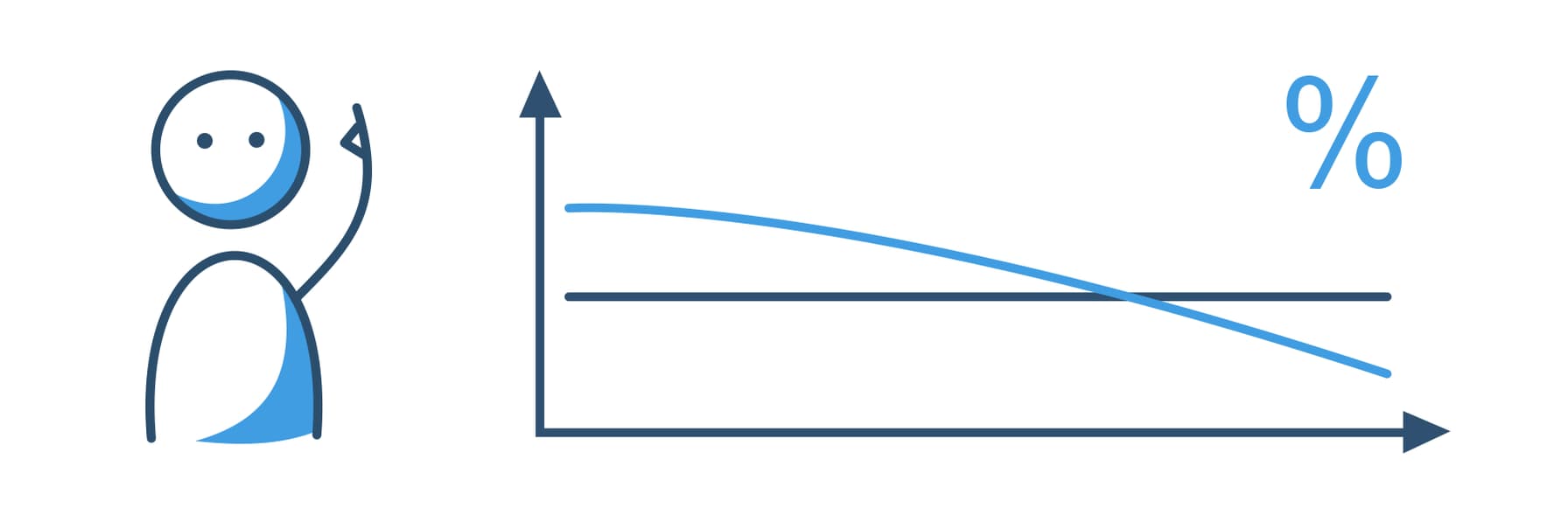
A disadvantage of repayment loans is that the borrower's initial burden from the payment obligations is relatively high. In the example already mentioned, the first installment would be over €916, while by comparison an annuity loan would have an initial installment of around €733. After about half the loan term, the rate of the installment loan will be lower in amount than the rate for an annuity loan.
How can you secure further advantages with a repayment loan?

Households usually include the initial level of instalments for an installment loan in their budget planning. The differences arising from the continuously falling instalments could, for example, be saved. The financial market offers various suitable products for this, ranging from instant-access savings accounts to building savings contracts (Bausparvertrag) possibly serviced via employee savings allowances. This could build up a cushion that can then be used for a partial prepayment at the end of the fixed-interest period.
The advantage of this approach becomes particularly apparent in times of rising interest rates. Then the lender will likely refuse to extend the installment loan at the end of the fixed-interest period out of its own economic interest and insist on a completely new loan agreement with higher interest rates. With the partial prepayment that becomes possible by investing the ever-growing differences to the standard instalment, the borrower can mitigate additional burdens from interest rate increases. This advantage is also usable if the installment loan was concluded in a period of generally low interest rates and is equipped with a variable interest rate. In that case every interest rate change by the lender offers an opportunity for a partial prepayment.
Repayment despite income reductions

The older a borrower becomes, the greater the risk that their income will decline. Illness, accidents and loss of earning capacity are the most frequent reasons why claims from loans can no longer be serviced fully or at all as one ages. Here another plus of installment loans becomes apparent. Reductions in income burden household budgets less because the instalments for the installment loan have already decreased significantly after a few years. This is because the monthly interest amounts are always calculated based on the remaining outstanding balance. As a result, the final instalment often only comprises the agreed repayment portion. The continuous reductions in monthly burdens from an installment loan are particularly pronounced when no fixed lump sums for the repayment portion have been agreed, but the loan contract contains a constant percentage repayment based on the outstanding balance. Then the amounts payable for repayment decrease just as the interest amounts due do.
Who is the repayment loan particularly suitable for?
The conclusion from all the aspects mentioned is that an installment loan is a good choice for anyone who wants to reduce their existing debt quickly. The falling monthly instalments provide increasing certainty that one can really raise the funds for the loan in the long term. The costs of residual debt insurance are also significantly lower with a repayment loan compared to an annuity loan. This is because the premiums for residual debt insurance are always calculated on the basis of the remaining outstanding balance. After the end of the fixed-interest period, the lower outstanding balances compared with an annuity loan can be used to negotiate more favorable interest rates or to switch to unsecured consumer loans. In addition, for the same loan amounts, interest rates and terms, the total costs of a repayment loan are lower than those of an annuity loan.
Installment loan
The installment loan is also referred to in technical terms as a repayment loan. Laypeople often lump it together with the classic consumer instalment loan. However, in the vast majority of cases the consumer instalment loan is structured as an annuity loan, which differs significantly from an installment loan. In an annuity loan, fixed payments composed of interest and principal are made. This makes the cost of the loan easy to plan but usually results in higher overall costs for a loan.
With an installment loan, the lender and the borrower agree on a constant payment regarding the repayment amount. This can be set monthly, quarterly, semi-annually or annually. Two approaches are possible: on the one hand, a fixed sum can be contractually agreed as the repayment. On the other hand, the bank and the borrower can fix an annual percentage of the remaining loan balance as the repayment. The fixed-sum approach is applied across the full spectrum of loans for all kinds of purposes. The fixed percentage of the outstanding loan balance is preferred in the area of property financing.
The advantages and disadvantages of installment loans
A significant advantage of installment loans is that the outstanding balance falls rapidly at the beginning of the term. By the end of the original fixed-interest period agreed in the loan contract, a substantial portion of the loan has already been repaid, so that if the borrower wishes to extend the loan or take out a completely new loan agreement, they will be negotiating over a considerably lower sum. This is especially advantageous in mortgage financing, since interest rates depend on what percentage of the determined lending value of a property the financing reaches. An installment loan that has already been repaid significantly may not only be refinanced by another mortgage secured by real estate liens, but the borrower may also consider consumer loans as an alternative. For consumer loans the incidental costs are lower and the borrower has greater individual flexibility in repayment.
Because the outstanding balance on an installment loan falls quickly, the interest burden is also lower than, for example, with an annuity loan. Comparing a loan of €100,000 with a monthly repayment of €500 and an interest rate of 5% per year, the installment loan would yield interest savings of around €5,500 over the entire term. Another advantage of installment loans derives from the fact that the total burden per year, quarter, half-year or month constantly decreases. This means the borrower is less likely to be unable to meet the payment obligation due to the loss of tax benefits or government subsidies after a few years. That in turn reduces the lender's default risk, which often results in cheaper interest rates being negotiated for installment loans than for annuity loans.
A disadvantage of repayment loans is that the borrower's initial burden from the payment obligations is relatively high. In the example already mentioned, the first installment would be over €916, while by comparison an annuity loan would have an initial installment of around €733. After about half the loan term, the rate of the installment loan will be lower in amount than the rate for an annuity loan.
How can you secure further advantages with a repayment loan?
Households usually include the initial level of instalments for an installment loan in their budget planning. The differences arising from the continuously falling instalments could, for example, be saved. The financial market offers various suitable products for this, ranging from instant-access savings accounts to building savings contracts (Bausparvertrag) possibly serviced via employee savings allowances. This could build up a cushion that can then be used for a partial prepayment at the end of the fixed-interest period.
The advantage of this approach becomes particularly apparent in times of rising interest rates. Then the lender will likely refuse to extend the installment loan at the end of the fixed-interest period out of its own economic interest and insist on a completely new loan agreement with higher interest rates. With the partial prepayment that becomes possible by investing the ever-growing differences to the standard instalment, the borrower can mitigate additional burdens from interest rate increases. This advantage is also usable if the installment loan was concluded in a period of generally low interest rates and is equipped with a variable interest rate. In that case every interest rate change by the lender offers an opportunity for a partial prepayment.
Repayment despite income reductions
The older a borrower becomes, the greater the risk that their income will decline. Illness, accidents and loss of earning capacity are the most frequent reasons why claims from loans can no longer be serviced fully or at all as one ages. Here another plus of installment loans becomes apparent. Reductions in income burden household budgets less because the instalments for the installment loan have already decreased significantly after a few years. This is because the monthly interest amounts are always calculated based on the remaining outstanding balance. As a result, the final instalment often only comprises the agreed repayment portion. The continuous reductions in monthly burdens from an installment loan are particularly pronounced when no fixed lump sums for the repayment portion have been agreed, but the loan contract contains a constant percentage repayment based on the outstanding balance. Then the amounts payable for repayment decrease just as the interest amounts due do.
Who is the repayment loan particularly suitable for?
The conclusion from all the aspects mentioned is that an installment loan is a good choice for anyone who wants to reduce their existing debt quickly. The falling monthly instalments provide increasing certainty that one can really raise the funds for the loan in the long term. The costs of residual debt insurance are also significantly lower with a repayment loan compared to an annuity loan. This is because the premiums for residual debt insurance are always calculated on the basis of the remaining outstanding balance. After the end of the fixed-interest period, the lower outstanding balances compared with an annuity loan can be used to negotiate more favorable interest rates or to switch to unsecured consumer loans. In addition, for the same loan amounts, interest rates and terms, the total costs of a repayment loan are lower than those of an annuity loan.