Fixed-rate Loans
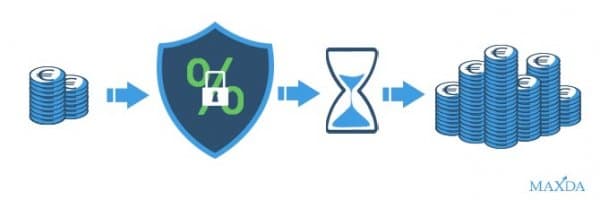
When a lender, such as a bank, grants a loan, the interest or interest rate represents its earnings and security. Therefore, installment loans with a fixed interest rate (also called fixed-rate loans) are interesting for both parties. Such an interest lock-in always takes place for a specific period, which is usually shorter than the total term of the loan. This fixed interest rate is often referred to as an interest lock-in. It enables both parties (borrower and lender) to calculate income and expenses, at least in the near future. After the lock-in period expires, a new fixed interest rate is set, or a fixed rate may be waived. In the latter case, repayment of a larger amount is often possible, or even the repayment of the entire remaining balance. However, a fixed interest rate is an attractive option for both parties. The fixed rate allows the bank to calculate its exact earnings on the fixed-rate loan, and it offers the borrower a bit more certainty. Fixed-rate loans protect the borrower if interest rates rise, because the remaining balance is often still so high that full repayment is not yet possible. As long as the lender cannot detect changes in creditworthiness, there is usually no reason for it to change the fixed rate or even to demand full immediate payment.

Loans with lower burden thanks to fixed interest periods
During the term of a loan there are many uncertainties in the borrower's life. One thing the borrower can be sure of, however, is protection from rising interest rates during the fixed-rate period. Such a fixed-rate period is particularly interesting for long-term loans, especially in times of rising interest rates, and fixed-rate loans can therefore temporarily protect the borrower from having to pay more — and this over a long period.
Setting the fixed interest rate

There are two ways to calculate the interest for installment loans with a fixed rate. First, the creditworthiness-based option, where the fixed rate is determined by the borrower's individual creditworthiness. The second variant is the creditworthiness-independent rate determination. Here only external factors are taken into account. That means a loan is offered with the same conditions for everyone. Prerequisites for a lower fixed rate are the amount of the loan and the term. Creditworthiness-independent loans still require a Schufa check. The borrower's financial circumstances must meet the lender's standards of creditworthiness; otherwise, even with the creditworthiness-independent variant, the loan application can be rejected. Creditworthiness therefore also plays a role in creditworthiness-independent fixed-rate loans. Only in the creditworthiness-based variant is the fixed rate individually tailored to the borrower. It is still important that the borrower obtains detailed information beforehand and carries out a loan comparison. Comparing loans can help save high costs. In particular, different interest rates should be compared, but fees and other costs should also be included in the comparison.
Not exclusively for corporate customers
Fixed-rate loans can be used by both corporate customers and consumers. The difference mainly lies in the fact that interest lock-in periods for corporate customers can already be possible from one month, i.e., also for short terms. If a consumer is interested in a fixed-rate loan, the loan term primarily determines the level of the fixed rate. Corporate customers may also have the option, after the term expires, to partially or fully repay the loan. With fixed-rate loans for private customers, a follow-up financing usually needs to be negotiated; partial repayment may also be part of the negotiation. Full repayment is only an option to a limited extent for consumers and is rarely offered. For private customers, the rate is adjusted after the fixed period, which means that rate changes are taken into account and the current interest rate is used. For corporate customers, however, the remaining rate and a margin agreed at contract signing are often used if the remaining balance is not fully repaid.
Consumers can also terminate with long terms
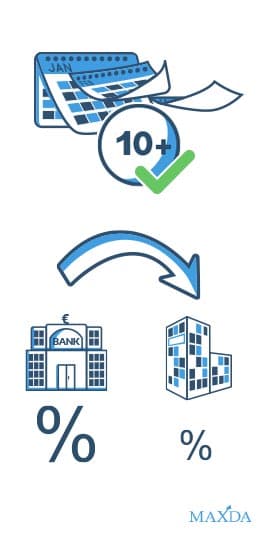
Fixed-rate loans mean that the private borrower is initially protected from a higher interest rate, but this also ties them to the lender or bank for the duration of the fixed rate. However, fixed-rate loans also offer the option of termination, including for private customers. This is a good option for long-term loans and can only be used if the loan term amounts to more than ten years. If this is the case, and the loan has already been running, for example, for eleven years, the borrower may terminate the lender's contract and carry out a refinancing. However, the borrower must still observe the six-month notice period. If, for example, nine years still remain and the borrower receives a better offer, they are free to switch to the better offer before the end of the originally intended term.
Fixed-rate loans - Flexible despite commitment
Fixed-rate loans therefore offer many advantages for borrowers despite the commitment. For long terms, the borrower is bound to the respective provider or bank with the specified rates, but the fixed rate provides a certain degree of calculable certainty. During the lock-in period, one is also protected from the risk of changing interest rates. Even this can be freely negotiated in creditworthiness-based loans. The lender must only agree. The borrower is even flexible enough to refinance after ten years; fixed-rate loans are therefore an individual and flexible way to realize larger dreams despite being tied to the lender.
Fixed-interest Savings
Fixed interest rates also exist for fixed-interest savings. Fixed-interest savings is also called a fixed-rate bond and is implemented on a so-called fixed-term deposit account. A fixed-term deposit is placed for a certain period and the interest rate remains the same during that time. The savings are protected by the deposit insurance of the banks and are thus not affected by market fluctuations. Deposit insurance applies to the fixed-term deposit account, instant-access savings accounts (Tagesgeldkonto) and current accounts. On an instant-access savings account, savings can be placed and accumulated at the current daily savings rate. A monetary investment can therefore be made either in a fixed-term deposit account or an instant-access savings account. The difference between investing as fixed-term deposit or as instant-access savings is that money in an instant-access savings account is not tied to a certain term compared with a fixed-term deposit account. With a fixed-term deposit account, access to the accumulated money is possible at the end of the term.