Directly to the topic:
Introduction of the Euro: The long road to a single currency
Countries participating in the introduction of the euro
The euro: acceptance in times of crisis
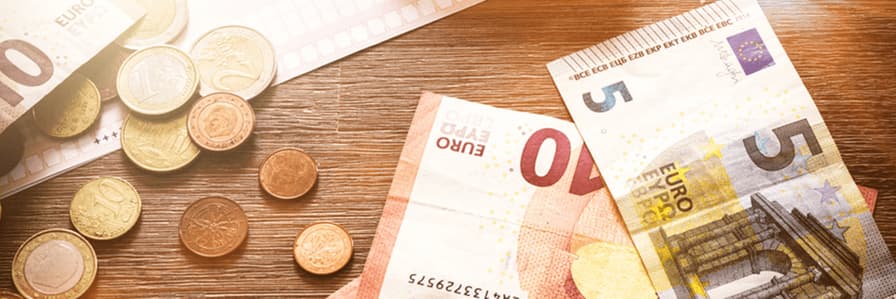
Since 2002 the euro has been the common currency of several European states that together form the European Economic and Monetary Union. Today the euro, alongside the US dollar, is considered a global reserve currency.
Introduction of the Euro: The long road to a single currency
After the Second World War, a basic conviction emerged in the Western-influenced states that stability and peace in Europe could only be achieved with the Federal Republic and not without it. Not least under the pressure of the debate about a possible neutrality of the FRG during the Cold War, the idea of establishing a European Economic Community (EEC) and a European Defence Community (EDC) was born. The latter failed due to resentments in France, but the idea of the EEC survived. Under Walter Hallstein, the first model of a monetary union in Western Europe was presented in 1962. However, interest in political unity was still very limited. The idea was revived in 1977 when the newly appointed President of the European Commission, Roy Jenkins, initiated the creation of the European Monetary System (EMS). This envisaged creating an artificial currency among the existing national European currencies, the ECU. The ECU served as a reference value for the main European currencies; only coins with a symbolic value were issued and banknotes were not produced at all. The ECU was never used as an effective currency. Although there were concrete plans to establish the ECU as a means of payment in the early 1980s, the second oil crisis of 1979 halted all efforts. The struggle to build the European Economic and Monetary Union (EMU) was the main focus in the late 1980s and the 1990s. The first stage of the union was set out in the Maastricht Treaty of 1992. After the European Central Bank (ECB) was established in Frankfurt in 1998, the third phase of the EMU could begin and the single currency to be introduced received the name euro. Previously, other names had been proposed — franc, guilder or even attaching the old currency to the euro (e.g., euro-mark) were considered but ultimately abandoned. In 1998 the exchange rates between the euro and the other currencies were finalized, and a year later the first transfers in euros could be made; savings accounts could also be converted to euros. In September 2001 the first euro coins could be purchased in Germany with "starter kits," and at the turn of the year 2001/2002 the new currency was introduced. The transition period was set at two months. Gradually the old currency, the Deutsche Mark, also disappeared in cash form as ATMs dispensed only euros and retail trade gave change in the new currency. From March 2002, Deutsche Mark cash could only be exchanged for euros at the Deutsche Bundesbank.
The euro as a common currency

A similar currency change took place in the other countries. Transaction costs in intra-European trade fell, increasing domestic trade within the eurozone by 5–15%. Furthermore, it was hoped that price differences in services and products within the EU would be reduced with the common currency. As a logical consequence, competition between European companies intensified and product costs fell in some areas, benefiting consumers. Without conversion issues, prices could be compared thanks to the euro, both in the economy and in tourism. The major problem with the common currency became apparent in the recent crisis. The European Central Bank (ECB) and the European Commission were not always able to compel member states to maintain balanced public finances, and the crisis in Greece could trigger a chain reaction in the southern eurozone countries — something that would not have happened with different currencies. However, this also demonstrates an advantage: struggling EU states are supported by the community; companies that cannot collect receivables in a crisis country within the EU have hope of recovering their money thanks to rescue mechanisms. The differing interest rate policies among member states, sometimes differing by up to 5%, pose difficulties and thus present a challenge for a common monetary and interest rate policy in the euro area.
Countries participating in the introduction of the euro
When the decision to form a monetary union in Europe took concrete shape, a total of eleven countries had declared their readiness to adopt the currency. These were Belgium, Spain, Ireland, Italy, Luxembourg, the Netherlands, Germany, France, Finland, Austria and Portugal. Before the introduction, Greece also joined the eurozone, creating EA-12 from EA-11. From 2007 onward, additional countries joined annually: first Slovenia, in 2008 Cyprus and Malta, followed by Slovakia in 2009 and Estonia two years later. Thus the number of euro member states grew to 17, and the eurozone is often referred to as Euro-17. Furthermore, financial transactions are partially or wholly conducted in euros in various non-member countries. The European microstates Andorra, Monaco and the Vatican have agreements to use the euro. Overseas island states have also chosen the European currency as a means of payment. In addition, Kosovo and Montenegro use the euro, as do the British sovereign bases Akrotiri and Dekelia in Cyprus.
The euro: acceptance in times of crisis
During the euro crisis voices against the euro grew louder and some called for a return to the Deutsche Mark. Acceptance of the common currency was already cautious in many countries at the time of its introduction. In Germany the euro was established as a means of payment against the will of a majority of the population. Many people mourn the old currency and imagine times with the Deutsche Mark in Germany to have been better and more secure. The idea of the "Teuro" emerged, a mocking term for the euro that is meant to suggest increased prices in Germany due to the currency. These allegations, however, have been shown to be unfounded based on statistical data, but they are often used by opponents to stir up sentiment. Outside Europe the euro enjoys much greater popularity. The OPEC countries seriously discussed switching oil prices to the euro, a proposal that was dismissed again in the wake of the Iraq War. Despite the euro's limited acceptance among the populations, international financial reserves have been held in euros as the second most common currency since its introduction.