What is a lender?
A creditor is a person who lends money to another person and expects repayment of the borrowed amount plus interest at a later date. This is also referred to as a lender.
In contrast, the debtor is the one who borrows the money from the creditor and must repay it together with the agreed interest. Creditors, i.e. lenders, and debtors can be either natural persons (other individuals) or legal entities, for example a stock corporation, a GmbH, a registered association, or a registered cooperative. Additional fees can also arise in connection with a loan.
MAXDA, as a loan broker, stands between the lender and the borrower.

What is meant by a loan?
A loan is not only the borrowing of money; many other services also count as a loan. For example, every holder of a savings book or an investment account is a lender, because they grant a loan to the bank or savings bank where the account is held.
The financial institution receives from the saver a certain amount, which it must either repay on demand or at a fixed date including interest. Until the amount is repaid, the bank can use the money, while the saver refrains from accessing their funds during this time.
But there are also other forms of credit granting, for example when a payment term is granted in a purchase contract. The buyer can take possession of the goods immediately after signing the contract and resell them or use them in production. Since the buyer only has to pay the purchase price later, the seller grants them a credit until final payment.
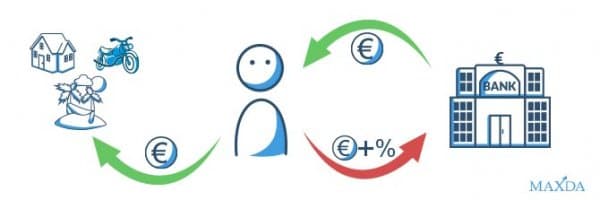
The most common form of lending, however, is the classic installment loan, which private consumers or companies can take out from a lending institution. In this case, the lender provides the borrower with a fixed sum, which is repaid in installments. The interest is added to the loan amount and paid together with the monthly installments, which accordingly increase.
Another form of credit is, for example, the so-called overdraft facility, in which an account holder is granted a credit line up to which they may overdraw their current account. In this case, the bank as lender will also state an interest rate that it charges for the borrowed money. Interest, however, only has to be paid on the amount actually used, and the borrower can decide for themselves when and in what amount they repay the overdraft.
Risks for lenders
The lender's risk always lies in the borrower being unable to repay the loan amount and the interest. To protect themselves, lenders usually check conditions such as the borrower's creditworthiness with Schufa and may require additional collateral to secure the installment loan.
If the borrower cannot repay the loan, the lender is allowed to use the collateral to recover the money.