Purchase loan
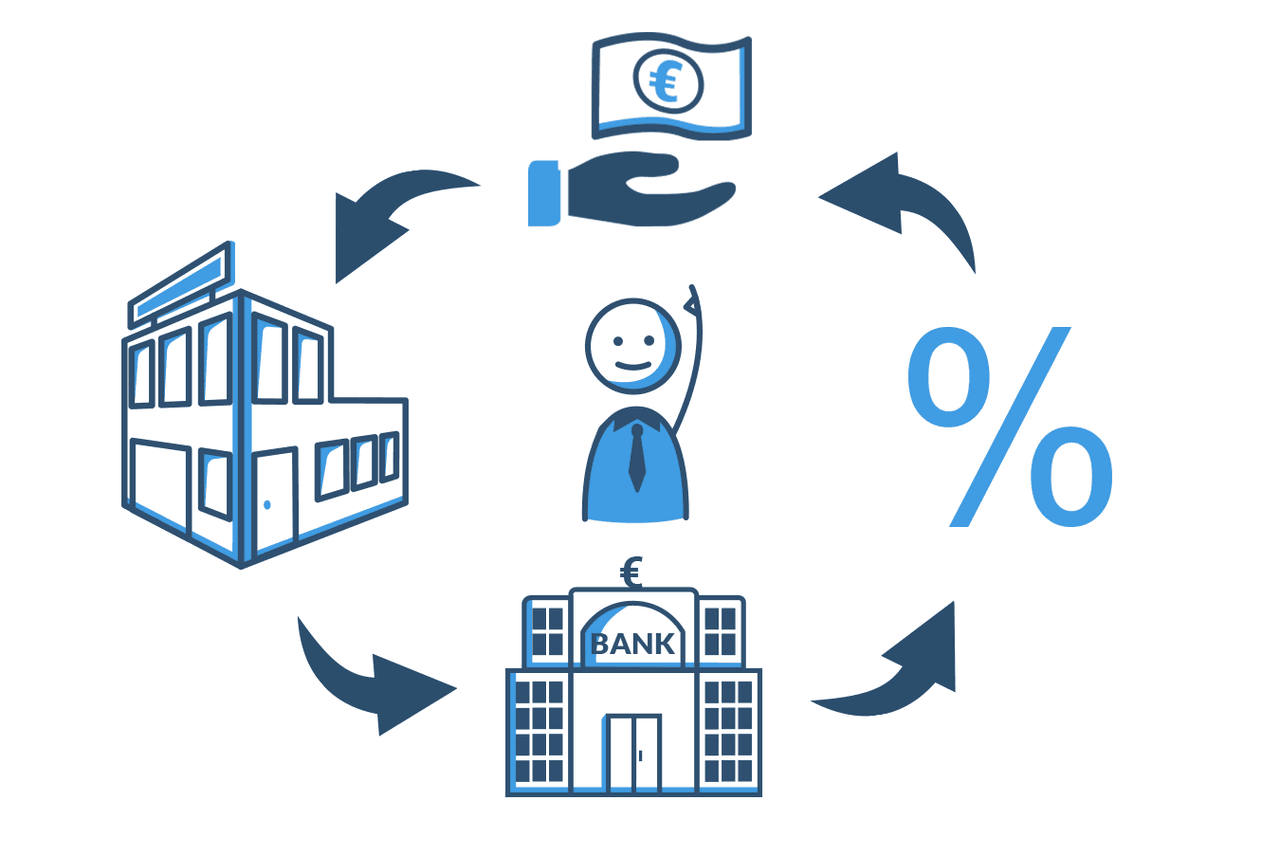
There are different types of loans. In general, a loan means borrowing a sum of money to finance private or business consumer goods or investment goods. This amount, which is paid out to private customers (personal loan) or businesspeople (business loan) under certain conditions, must be repaid in monthly installments over a specified period. The installments remain the same for the term of the loan and include principal repayment and interest. If applicable, they also include fees charged for the disbursement of the loan. The credit institution or bank that grants the loan is referred to as the lender. The borrower in this context is the private person who takes out the loan or the "borrowing" company.
What types of loans are there?

With the variety of loans and credit products available, customers can easily lose track — there are overdraft facilities (dispo), forward loans, pawn loans, framework loans, mortgage financing, small loans, instant loans or purchase loans, to name just a few. In particular, the purchase loan (also called a consumer loan) is very popular with private individuals. It is usually not issued to self-employed persons. To finance private purchases as a self-employed person, a personal loan would therefore be necessary. Mortgage financing or the financing of a property purchase generally does not fall under the purchase loan. Banks and credit institutions usually offer separate solutions for mortgage financing.
A purchase loan is often also referred to as a consumer credit. It is a medium-term loan. In its conditions, the purchase loan differs from other types of credit, such as an overdraft. The term of this type of loan can span several years, and in exceptional cases be even longer. The loan limit for a purchase loan is up to EUR 250,000. Private customers can use such a loan to realize personal wishes — for example, to purchase furniture, to finance a vehicle (car loan), to pay for travel or other consumer goods. As a result, the disbursement for a purchase loan is purpose-bound and the duration typically corresponds to the expected useful life of the consumer good. The purchase loan is especially popular as a car loan.
How does the loan approval process work for a purchase loan?
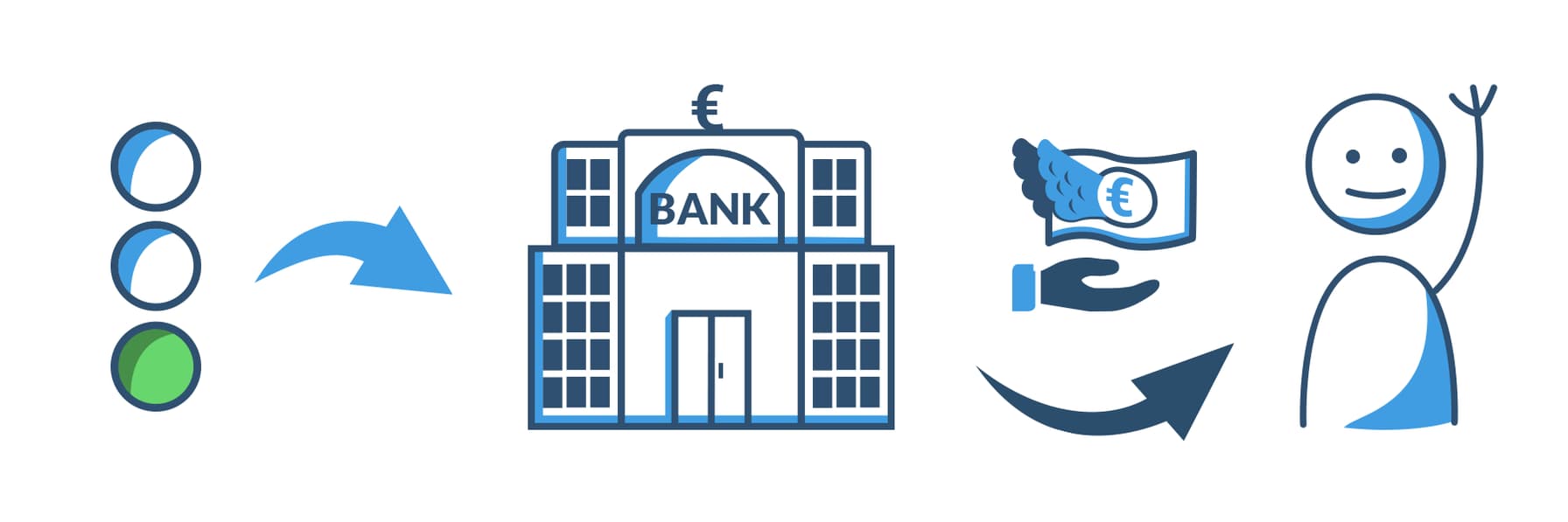
Before a loan is granted, the lender first checks the applicant's creditworthiness (bonität) and determines appropriate interest and repayment rates. There are various ways to check creditworthiness. This task is carried out by so-called scoring agencies, such as Schufa. Obtaining a Schufa report is standard practice in Germany. Schufa stores data related to the borrower's "financial past". For example, all concluded loans are recorded, installment purchases with mail-order companies, existing credit cards, and also how loans were repaid. From this, a score value is calculated — the so-called credit rating — which can influence the interest rate tier. In addition to this scoring, there are other ways to verify an applicant's creditworthiness. These include proof of income, which shows how high the monthly burden may be. If the purchase loan is very large, a guarantor may be required, or a residual debt insurance policy, or an assignment declaration, for example of the vehicle to be purchased.
Terms and conditions of the purchase loan
The purchase loan and its terms
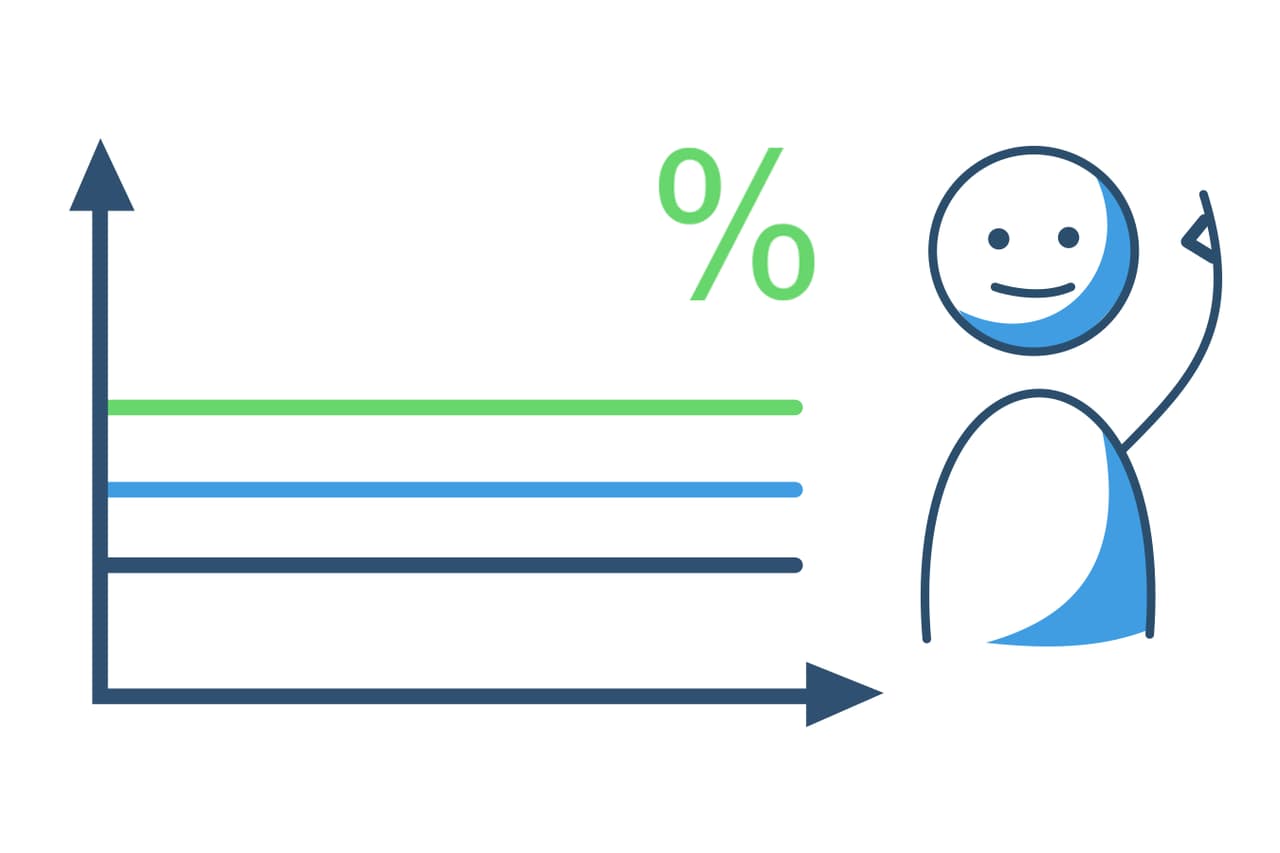
The terms of a purchase loan or consumer credit are presented transparently to the customer when the loan agreement is concluded. Interest rates can vary depending on the purpose and the lender. The final interest payable includes both the nominal interest rate and the reference rate. This overall rate is expressed as the effective annual percentage rate. For example, a furniture store or car dealer may offer 0% financing, which, however, does not necessarily mean that no interest is due. You should pay close attention to which interest rate this percentage refers to. As a rule, a certain interest rate is always payable and is calculated in full in advance. There are no annual interest rebates. This way the customer knows from the outset which additional amounts will be due. Fees charged when concluding a contract are also taken into account. The term and the amount of the monthly installments are clearly stated.
The monthly repayment including interest and fees is called amortization. You can also determine the expected amount in advance using a loan comparison or financing calculator. There are various comparison portals on the internet that offer a loan calculator. A loan calculator compares offers from different banks and credit institutions. Here you can enter the required loan amount, the desired term and sometimes the intended use. After entering the data you receive a comparison of the conditions offered by different providers. The comparison results can be filtered by various criteria (bank, term, interest rate, annual percentage rate, etc.) to find the offer that best matches your personal preferences. In many cases it is possible to apply for the loan online directly from the comparison.
This means you enter your data, fill out a self-disclosure and give consent for the retrieval of your personal Schufa score. There is also the possibility of loans without Schufa — for example here at Maxda. With ID data, a decision can usually be made online immediately as to whether a purchase loan can be approved. In the case of a positive decision, the loan application can either be printed immediately, signed and returned via the PostIdent procedure. The PostIdent procedure is used to verify identity and can be carried out at a Deutsche Post branch. The postal employee certifies the applicant’s signature and thus verifies their identity. You can also have these documents sent to you by post and then proceed in the same way as after printing. If you want to complete the loan agreement on site, for example at a car dealer, this is often even easier because the dealer usually handles data entry. If everything goes well, you will receive the contract documents with the payout confirmation by post shortly.
Disbursement of a purchase loan
The disbursement of the loan amount for a purchase loan can either be made in cash or by transfer to an existing current account. If you want to open a new account specifically for the purchase loan, this can often be requested from the disbursing lender. Otherwise, it is common to use an existing current account. The monthly installments are then also debited from this account. Special repayments to pay off the loan faster must be contractually agreed in advance. If special repayments are permitted, the borrower can flexibly make a one-time payment or several smaller additional payments. Depending on the contract, a loan can sometimes be terminated after six months with three months' notice. Depending on the agreed conditions, early repayment penalties may apply for special repayments. Fees are generally not refunded on a pro rata basis.
What advantages does a purchase loan offer?
The interest rates for a purchase loan are fixed for a certain period. The amount of the loan installments is set according to the private customer's personal requirements and capabilities. Fixed planning is possible due to the consistent installments. The costs, interest and fees of this installment loan are manageable. Special repayments are usually possible with this type of loan. The monthly installments are conveniently debited from the account. The purchase loan is characterized by quick processing of the credit decision and disbursement. Interest rates for purchase loans are generally lower than for an overdraft facility. The purchase loan is suitable for private customers who want to fulfill a personal wish at short notice or make a larger purchase. With a maximum loan amount of up to EUR 250,000 and a limited term, this form of installment loan can be well integrated into long-term financial planning. In addition, the interest on this loan is significantly cheaper than on an overdraft or current account overdraft.
Purchase loan
There are different types of loans. In general, a loan means borrowing a sum of money to finance private or business consumer goods or investment goods. This amount, which is paid out to private customers (personal loan) or businesspeople (business loan) under certain conditions, must be repaid in monthly installments over a specified period. The installments remain the same for the term of the loan and include principal repayment and interest. If applicable, they also include fees charged for the disbursement of the loan. The credit institution or bank that grants the loan is referred to as the lender. The borrower in this context is the private person who takes out the loan or the "borrowing" company.
- INHALTSÜBERSICHT ZUM THEMA ANSCHAFFUNGSKREDIT
- Welche Arten von Krediten gibt es?
- Konditionen und Bedingungen des Anschaffungskredits
- Vorteile eines Anschaffungskredits
What types of loans are there?
With the variety of loans and credit products available, customers can easily lose track — there are overdraft facilities (dispo), forward loans, pawn loans, framework loans, mortgage financing, small loans, instant loans or purchase loans, to name just a few. In particular, the purchase loan (also called a consumer loan) is very popular with private individuals. It is usually not issued to self-employed persons. To finance private purchases as a self-employed person, a personal loan would therefore be necessary. Mortgage financing or the financing of a property purchase generally does not fall under the purchase loan. Banks and credit institutions usually offer separate solutions for mortgage financing.
A purchase loan is often also referred to as a consumer credit. It is a medium-term loan. In its conditions, the purchase loan differs from other types of credit, such as an overdraft. The term of this type of loan can span several years, and in exceptional cases be even longer. The loan limit for a purchase loan is up to EUR 250,000. Private customers can use such a loan to realize personal wishes — for example, to purchase furniture, to finance a vehicle (car loan), to pay for travel or other consumer goods. As a result, the disbursement for a purchase loan is purpose-bound and the duration typically corresponds to the expected useful life of the consumer good. The purchase loan is especially popular as a car loan.
How does the loan approval process work for a purchase loan?
Before a loan is granted, the lender first checks the applicant's creditworthiness (bonität) and determines appropriate interest and repayment rates. There are various ways to check creditworthiness. This task is carried out by so-called scoring agencies, such as Schufa. Obtaining a Schufa report is standard practice in Germany. Schufa stores data related to the borrower's "financial past". For example, all concluded loans are recorded, installment purchases with mail-order companies, existing credit cards, and also how loans were repaid. From this, a score value is calculated — the so-called credit rating — which can influence the interest rate tier. In addition to this scoring, there are other ways to verify an applicant's creditworthiness. These include proof of income, which shows how high the monthly burden may be. If the purchase loan is very large, a guarantor may be required, or a residual debt insurance policy, or an assignment declaration, for example of the vehicle to be purchased.
Terms and conditions of the purchase loan
The purchase loan and its terms
The terms of a purchase loan or consumer credit are presented transparently to the customer when the loan agreement is concluded. Interest rates can vary depending on the purpose and the lender. The final interest payable includes both the nominal interest rate and the reference rate. This overall rate is expressed as the effective annual percentage rate. For example, a furniture store or car dealer may offer 0% financing, which, however, does not necessarily mean that no interest is due. You should pay close attention to which interest rate this percentage refers to. As a rule, a certain interest rate is always payable and is calculated in full in advance. There are no annual interest rebates. This way the customer knows from the outset which additional amounts will be due. Fees charged when concluding a contract are also taken into account. The term and the amount of the monthly installments are clearly stated.
The monthly repayment including interest and fees is called amortization. You can also determine the expected amount in advance using a loan comparison or financing calculator. There are various comparison portals on the internet that offer a loan calculator. A loan calculator compares offers from different banks and credit institutions. Here you can enter the required loan amount, the desired term and sometimes the intended use. After entering the data you receive a comparison of the conditions offered by different providers. The comparison results can be filtered by various criteria (bank, term, interest rate, annual percentage rate, etc.) to find the offer that best matches your personal preferences. In many cases it is possible to apply for the loan online directly from the comparison.
This means you enter your data, fill out a self-disclosure and give consent for the retrieval of your personal Schufa score. There is also the possibility of loans without Schufa — for example here at Maxda. With ID data, a decision can usually be made online immediately as to whether a purchase loan can be approved. In the case of a positive decision, the loan application can either be printed immediately, signed and returned via the PostIdent procedure. The PostIdent procedure is used to verify identity and can be carried out at a Deutsche Post branch. The postal employee certifies the applicant’s signature and thus verifies their identity. You can also have these documents sent to you by post and then proceed in the same way as after printing. If you want to complete the loan agreement on site, for example at a car dealer, this is often even easier because the dealer usually handles data entry. If everything goes well, you will receive the contract documents with the payout confirmation by post shortly.
Disbursement of a purchase loan
The disbursement of the loan amount for a purchase loan can either be made in cash or by transfer to an existing current account. If you want to open a new account specifically for the purchase loan, this can often be requested from the disbursing lender. Otherwise, it is common to use an existing current account. The monthly installments are then also debited from this account. Special repayments to pay off the loan faster must be contractually agreed in advance. If special repayments are permitted, the borrower can flexibly make a one-time payment or several smaller additional payments. Depending on the contract, a loan can sometimes be terminated after six months with three months' notice. Depending on the agreed conditions, early repayment penalties may apply for special repayments. Fees are generally not refunded on a pro rata basis.
What advantages does a purchase loan offer?
The interest rates for a purchase loan are fixed for a certain period. The amount of the loan installments is set according to the private customer's personal requirements and capabilities. Fixed planning is possible due to the consistent installments. The costs, interest and fees of this installment loan are manageable. Special repayments are usually possible with this type of loan. The monthly installments are conveniently debited from the account. The purchase loan is characterized by quick processing of the credit decision and disbursement. Interest rates for purchase loans are generally lower than for an overdraft facility. The purchase loan is suitable for private customers who want to fulfill a personal wish at short notice or make a larger purchase. With a maximum loan amount of up to EUR 250,000 and a limited term, this form of installment loan can be well integrated into long-term financial planning. In addition, the interest on this loan is significantly cheaper than on an overdraft or current account overdraft.