The subordinated loan
Financing larger projects of all kinds is not always easy. A classic example is construction financing — this applies equally to the private and commercial sectors. Depending on the amount of available equity, it can be quite difficult to secure the necessary funds. A clever way of financing construction is the so-called subordinated loan, also known as a junior loan. But what makes this loan so special? And is it suitable for everyone?
What is a subordinated loan?
A subordinated loan is, in its basic structure, an ordinary loan, i.e. credit. However, this loan works with a few special characteristics. In the event of insolvency claims, it is always paid last. This means that the creditors of the loan must wait until all other outstanding obligations have been settled before the capital is available for them — if there is indeed enough to cover it. This greatly increases the risk for creditors, which is usually compensated by higher interest rates. Another peculiarity is that the collateral required for a subordinated loan can be comparatively low. The requirements are lower than for a classic loan.
Warning: The term subordinated loan can tempt one to regard the loan as less important. It is essential to note that payments for the loan carry the same weight as for other loans.
In the context of construction financing, a subordinated loan is generally used to create equity. The loan is recognized as such, which can be helpful if a 100% financing is required.
Outside private financing of construction projects or other ventures, the subordinated loan is also often found in the area of crowdfunding. Here the so-called profit-participating subordinated loan is typically used.
What is a profit-participating loan?
The profit-participating loan represents a special case of financing. As already mentioned, it is a classic financial product in crowdfunding. The loan is granted by companies rather than by a financial institution. These companies lend money to other businesses. In return, the lenders receive company shares or a share in profits — this financing remains in place until the loan amount is repaid with the agreed interest. Here too, repayment of outstanding amounts is treated as subordinated.
How a subordinated loan works
How does a subordinated loan work?
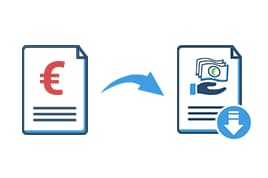
The relevant point for the subordinated loan is that it is treated as subordinate compared to other financial obligations. In the order in which outstanding loans must be repaid, the subordinated loan is typically last. Outstanding payments to banks or suppliers are always given priority. Once these are covered, payments for the subordinated loan are released.
If the loan is used for construction financing, the debt is entered in the land register. It is important that it is specifically recorded as a subordinated loan. If this is not the case, it will not be taken into account in the event of a foreclosure.
The default risk for the lender is extremely high with a subordinated loan. Because of the subordinated treatment in the event of insolvency, it is very likely that outstanding payments will not be met. If the available capital is used first to pay banks and suppliers, it is not uncommon for the sum to be insufficient to cover the subordinated loan.
What does a subordination agreement mean?

To rank the loan behind other due obligations, a subordination agreement is necessary. This is also referred to as dubordination or a subordination clause. The subordination agreement can be concluded in various forms. A distinction is made between a relative, simple and qualified subordination.
What is a subordinated loan with a relative subordination?
The agreement for relative subordination is made between individual creditors. Based on the agreement, claims and their ranking relative to each other are coordinated. If one creditor has subordinated themselves relative to another creditor, they can assert their claims only after the preceding creditor has been paid in full.
What is a subordinated loan with a simple subordination?
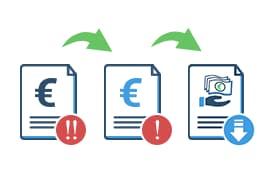
A simple subordination agreement stipulates that the creditor automatically ranks behind all other creditors with their claim. This subordination generally applies to all existing and future claims. Once all claims have been served, the subordinated claim can be paid in full or partially.
What is a subordinated loan with a qualified subordination?
Simple subordination treats the loan as debt capital. Under a qualified subordination, the loan is treated as equity. Accordingly, it is ranked behind the claims for equity. For companies, furthermore, a claim is only serviced from available annual and liquidation surpluses. In addition, assets are used that are freely available to the company. However, this only happens after all the company's creditors have been paid.
What does the ranking look like in the event of liquidation or insolvency?
If a subordination agreement is in place, the ranking is as follows:
- Normal liabilities to banks or suppliers, also called Senior Debt
- Subordinated loans, also called Junior Debt
- Shareholder loans
- Equity
What is a subordinated loan suitable for?
A subordinated loan is versatile in its applications. It is most commonly used in connection with the financing of real estate projects. This can involve new financing of private properties as well as refinancing for existing properties. The loan, if treated as equity, is also suitable for other areas:
- Conversion or extension of properties
- Renovations and refurbishment measures
- Inheritance payouts
It is also conceivable to use a subordinated loan to replace existing loans, such as car financing or a consumer loan. This makes the subordinated loan a versatile financial product.
Subordinated loans for construction financing
If a loan is needed for construction financing, a subordinated loan is an option — especially if a financial bottleneck occurs during the construction phase or renovation. Since the loan can be taken out with relatively few securities, an existing loan plays a subordinated role. However, some banks do take it into consideration. If the original loan exceeds the property value by more than 60%, the subordinated loan will be charged extra interest. In general, interest rates for subordinated loans in construction financing are higher than those for a classic construction loan.
Subordinated loans in crowdfunding and crowdinvesting
The subordinated loan as an investment opportunity?

In the area of crowdinvesting, it is common for projects to be financed through a subordinated loan. The contract for the loan is agreed between project owners or companies and the investors. The companies enter into the contracts in their legal form, for example as an AG or GmbH. The company or project sponsor receives the loan capital in the form of a subordinated loan. Investors receive the agreed interest for the financial transaction as returns.
How and when do I get my money back with a subordinated loan?

Those who invest in an ambitious project or a young company through crowdinvesting usually decide on a long-term investment. The invested capital is needed by companies and project managers for building and implementing businesses or projects. Repayment agreements are set individually for each crowdinvesting. Therefore, it is not possible to make a general statement about the repayment period. Below is an example of how repayment can be arranged:
For each investment a base interest rate is contractually fixed. The base interest is multiplied by the investment amount to determine the actual interest value for individual investments. An investor has a subordinated claim on the interest amount. They are entitled to the payment of the amount if certain conditions are met:
- Last year's EBITDA is positive
- The company's equity is positive
- The company is not endangered by distributions
Definition: EBITDA
It stands for Earnings before interest, taxes, depreciation and amortization. In German this means: Gewinn vor Zinsen, Steuern, Abschreibungen auf Sachanlagen und Abschreibungen auf immaterielle Vermögensgegenstände.
A sale can also trigger the distribution of interest. In this case the entire investment share is sold. Finally, a subordinated loan as a form of investment always has a predefined term. Once this has expired, the investor is entitled to the full interest sum.
What amount may be invested as a subordinated loan in a company?
For private investors
In Germany there is a cap on the investment amount in crowd financings. This applies to private individuals and is set at 10,000 euros. Once the investment amount exceeds 1,000 euros, it is necessary to submit a self-declaration. This is usually provided to the platform through which the crowdfunding is handled. It serves to confirm that the investor has 100,000 euros of disposable assets, or that they will invest at most two net monthly salaries. There are no fixed rules about the form in which this self-declaration must be submitted.
For professional investors
There is no upper limit for investments by corporations.
Risks of the subordinated loan
What risks does the subordinated loan pose for investors?

An investor who finances a subordinated loan assumes the legal position of the lender. The repayment claim depends entirely on the success of the project or the company. If the borrower is not financially successful and insolvency occurs, the investor's payment claim moves to the last place among creditors. Although this approach justifies high interest rates and thus high returns, it also entails an enormous risk. Above all because the investor becomes involved in the company in a way similar to a shareholder. This means the entrepreneur carries financing responsibility, which removes the protection typical of deposit business. There is no legal investor protection.
Why invest in a subordinated loan if you could end up with nothing in an insolvency?
Investing in crowdfunding projects and similar companies is indeed a risky undertaking. However, investors should consider the ratio of risk to return. Compared to classic investments, the returns are extremely high. A well-functioning project or a successful start-up can yield returns of up to 50%. Such sums are of course not commonplace, but they are more realistic than with most other investment forms.

What tax implications does my participation via a subordinated loan have?
The return is paid to investors in the form of interest. This interest is treated for investors as income from capital assets. This applies if the subordinated loan creditor is an individual permanently subject to taxation in Germany. The loan claim must also be considered part of private assets.
The borrower must not provide tax advice. The concrete taxation of the lender depends on the specific financial circumstances. It is therefore sensible to consult a tax advisor to find out what effects the interest income may have on tax liability.
If the loan has a fixed interest, the borrower is not obliged to withhold withholding taxes. For example, in the form of church tax or capital gains tax. This means that the entire amount of the interest is paid out to the lender.
The lender, i.e. the investor, is obliged to declare the interest income as income from capital assets. Accordingly, items such as income tax and the solidarity surcharge apply.
How high are the interest rates for a qualified subordinated loan?
The specific interest depends on several factors. It is determined anew for each project. This applies to investments as well as to classic loans. Compared to other financial products, interest rates in both cases are above average. This means that an investor achieves a good return. As a borrower, however, one must accept higher costs.
Smart investment by investors or a guarantee of loss?

Regardless of the type of investment, investors must be aware of their own risk tolerance. The subordinated loan is no exception. Those willing to take advantage of the high return opportunities of a crowdfunding campaign must also account for the high risk. It is difficult to predict the success or failure of a company or project. Young start-ups in particular are often overwhelmed in the early stages of expansion. Investors should not forgo thoroughly informing themselves about the investment projects.
Advantages and disadvantages of the subordinated loan
What are the advantages and disadvantages of the subordinated loan for the investor?

The high interest rates for subordinated loans are extremely attractive for private and commercial investors. Depending on the amount of the loan, the investor can choose a silent partnership in the company or assert enjoyment rights.
Definition: enjoyment right (Genussrecht)
An enjoyment right is considered a form of Junior Debt and is part of a company's mezzanine capital; that is, a hybrid of debt and equity. The enjoyment right holder is the capital provider and the company is the capital taker. The capital provider is granted asset rights typical of membership based on the loan amount — the enjoyment right.
Investing via a subordinated loan is generally very uncomplicated. Capital is collected via crowdfunding platforms. This makes it possible for small investors to support companies with enormous growth potential. This makes the subordinated loan interesting for a wide range of investors across income classes. The large number of young start-ups also allows investors to find an industry in which they believe in the future. For a long-term investment, which is often structured for more than 20 years, this is an important factor.
On the other hand, the lack of investor protection and the inevitable subordination agreement are disadvantages. Every investor must take on a high risk to benefit from the high return opportunities. In the event of liquidation of the company, it is very likely that investors in a subordinated loan will not be favored. The entire invested capital is lost in this case.
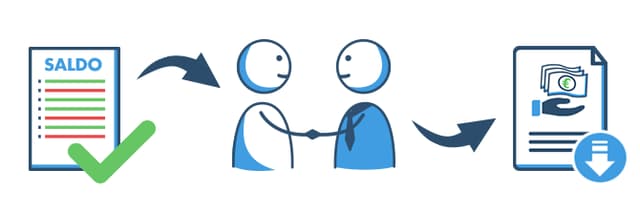
What should investors consider with a subordinated loan?
Investors must be aware that the legal regulations for a bank-independent subordinated loan often lie in grey areas. There is no investor protection and the entire capital can be lost in a worst-case scenario. Therefore it is important to work with a solid loan contract. This can create security in many areas. An important element is an agreement on the obligation to provide information. Have the contract template reviewed by an experienced lawyer or notary and request adjustments if necessary. The following points also minimize the risk of a subordinated loan:
- The option to use short terms
- Agree on interest that is not dependent on success
- Fair termination options
Ideally, the term is set to one year and is automatically extended by another year if not terminated. The notice period in a good contract should be no longer than six months. Investors can ask companies to disclose the balance sheets of previous years. This allows investors to gain an overview of the company's financial situation. If no existing finances are available, a business plan is helpful. It shows plans for building the company.
Important! As a lender, investors have no say in company decisions. The investor is neither a shareholder nor a voting partner. If decisions are made that do not align with the investor's expectations, the investor can only use their right of termination and exit the investment.
How to find a trustworthy provider for a subordinated loan?
The Federal Financial Supervisory Authority, BaFin, is an organization that supervises monetary and financial institutions of all kinds. It operates with strict guidelines and regular controls. If companies meet the high requirements, they are officially certified by BaFin. Subordinated loans are offered not only by banks but also by non-bank institutions and platforms. This makes it difficult for many consumers to find a provider that appears trustworthy across the board. BaFin states that it is generally advisable to have all documents reviewed by a private financial advisor. This applies equally to builders and investors.
Overview: advantages and disadvantages of subordinated loans
Whether small investor or property owner, this form of loan has a lot to offer. At the same time, lenders take on a high risk and private borrowers must expect high costs.
Advantages of the subordinated loan:
- Few collateral requirements
- High returns for investors
- Ideal for supplementing existing loans
Disadvantages of the subordinated loan:
- High risk for investors
- High interest costs for borrowers