What is a Swiss loan?
A classic loan application within the Federal Republic is subject to a number of requirements. An important condition is a good credit rating. This is ensured by a clean Schufa report. A Swiss loan describes a loan that waives a Schufa check and is taken out abroad within Europe.
The term Swiss loan has been retained even if the loan processing is not handled in Switzerland. This type of loan is a European financial product that is becoming increasingly popular. The possibility of taking out a loan without a Schufa check is a lifesaver for many consumers in financial emergencies.
General information about the Swiss loan
Where does the term Swiss loan come from?
::content-image{src="/images/legacy/maxda/themen/schweizer-kredit/02_schweizer-kredite_woher-der-name_50p_rechts.png" alt="Where does the name "Swiss loan" come from?" align="right" size="md" provider="none"} ::
Although it is a European principle, the term "Swiss loan" has become established. This is due to the fact that this type of loan was first offered in Switzerland. Different regulations and laws regarding lending apply in Switzerland. Since Schufa is a German company, no Schufa inquiry is made when taking out a loan in Switzerland. Accordingly, it is possible to find financial service providers there that grant a loan without a credit check.
Definition: Loan
A loan is a contract under the law of obligations that is concluded between a lender and a borrower. Colloquially, a loan is often referred to as credit, although these are not legally identical (§§ 488 to 490 BGB). A loan can relate to the provision of capital or tangible assets. The borrower undertakes to repay the nominal amount of the monetary debt at the agreed due date.
What characterizes a Swiss loan?
German financial institutions generally operate according to the principle of risk minimization. This means that borrowers with a higher risk profile either have to accept poor loan conditions or are not granted a loan at all. Foreign banks often operate with a more consumer-friendly approach – granting a loan is seen as an opportunity for both the consumer and the bank. Accordingly, it is easier to finance the desired amount. A Swiss loan offers a number of advantages:
- Fast processing
- Flexible financing options
- Little bureaucracy
- Low approval hurdles
The Swiss loan and Schufa
What is Schufa?
Schufa Holding AG is a private German credit agency. It is based in Wiesbaden and operates as a joint-stock company. The shareholders are largely made up of trading companies and credit institutions, but other service providers are also included. Schufa serves to provide contracting parties with relevant information about the creditworthiness of third parties.
Numbers and facts about Schufa:
- Data on over 60 million individuals
- Data on more than 5 million companies
- Almost 800 million individual data records
- Nearly 130 million Schufa inquiries annually
How does a negative Schufa entry occur?
When a Schufa report is requested, the lending institution or bank is informed of the so-called Schufa score. This score is calculated from various pieces of information. These include obvious elements such as existing loans, but also less obvious data such as place of residence.
Banks and service providers that work with Schufa transmit relevant data about private individuals and companies to the agency. If a payment for a loan installment is late, this information is forwarded to Schufa and stored there. Depending on the type of entry, negative data are deleted again after a certain period.
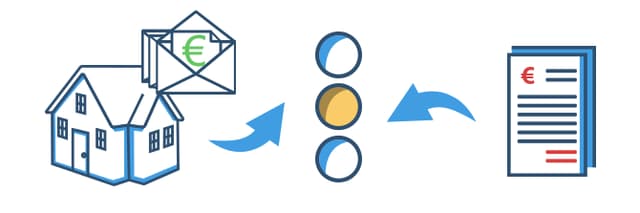
An existing loan is registered and deleted three years after it has been settled. The same applies to contracts with other service providers, such as mail-order companies or mobile phone providers. Account information is removed from Schufa when the account is closed. A negative Schufa entry mainly results from non-contractual behavior – for example, late repayment of loan installments.
Is the Swiss loan Schufa-free?

The core element of the Swiss loan is the absence of a creditworthiness check. There is no Schufa inquiry. The banks do not operate under the same conditions as German financial service providers and credit institutions. The borrower therefore has better chances of obtaining a loan.
How does a Swiss loan work?
The Swiss bank loan is usually processed through a loan broker. Private individuals can use brokers to obtain a Swiss loan. The lending modalities are very straightforward compared to German requirements. The specific prerequisites that must be met can vary slightly between banks. However, the following points always apply:
- Minimum age of 18 years
- Full legal capacity
- Regular income

How high the minimum income must be is determined individually for each loan application. The question of the income source is also considered on a case-by-case basis. The process is particularly simple for people who have been in permanent employment for more than a year.
The framework conditions for the Swiss loan are also variable. The loan amount, the term and the interest rate, as well as any fees, are determined by the chosen lending institution. Some institutions also work with a maximum age. Other factors in lending can include:
- Is there a joint income?
- Employee, civil servant or self-employed?
- Does the applicant currently have other loans (installment loans, quick loans) to repay?
Mediation through specialized providers is the easiest way to take out a loan. Brokers are in direct contact with foreign financial institutions. This greatly simplifies the time required and the entire process. Of course, it is also possible to contact a lending bank directly. Some banks advertise corresponding products on their own websites.
Is there a difference between a loan without Schufa and a Swiss loan?
Fundamentally, there is no real difference in the lending principle. German financial institutions also offer loans without Schufa checks. These are often so-called direct banks. However, this form of loan is often associated with very high costs. German banks also aim to keep the risk as low as possible. This is ensured by the consumer having to accept very poor loan conditions. A limited loan limit, high interest rates and short terms are just a few points that can make a Schufa-free loan in Germany very expensive. Since a Swiss loan waives a credit check from the outset, no special costs are added. Customers have the opportunity to secure the desired loan amount at a fair price.
Are Swiss loans reputable?

The same rules apply to a Swiss loan as to a classic bank loan at a local bank. Whether you are looking for a mortgage for construction financing or a loan to buy a car: caution is advised! Currently, there are more than 60 active banks in Germany alone offering thousands of loan products to consumers. If you are not sufficiently informed, the wrong choice can be made quickly. In the worst case, this can not only cause enormous costs in the long term, but such an ill-considered decision can lead to financial ruin.
Consumers should therefore be vigilant even with a Swiss loan. The offering for these foreign loans is steadily increasing. Not every product can convince with good prices and fair conditions. However, it is generally safe to say that a Swiss loan is not automatically an expensive financial trap – but a real alternative to a German bank loan with a Schufa check.
How do you find a reputable provider?

Although an inquiry for a Swiss loan can be made by phone or in writing, most customers choose to use an online application. With just a few clicks it is possible to have a loan inquiry for a Swiss loan reviewed.
Requests for a Swiss loan often come from applicants with poor creditworthiness. This means that the potential borrower is in a desperate financial situation. Questionable loan brokers are willing to exploit this situation to their advantage. A few points should be especially noted when choosing a reputable broker:
- There are no advance costs for advice, brokering, etc. before signing the contract.
- The broker is easy to reach: telephone hotline, e-mail contact, etc.
- Comprehensive, free service: consultation, assistance with documents
- Documents are sent by registered mail
- The broker only handles the loan - no additional products are offered or "pushed"
- Professional website layout - well structured, easy to understand
- The contract is transparent, easy to understand and clearly structured.
A reputable broker accompanies the borrower throughout the entire loan process. The broker helps to arrange financing even in difficult cases. As soon as a consumer feels uncomfortable with the broker or the lending institution, the application should be withdrawn immediately. This helps avoid costly wrong decisions.

Do Swiss loans always come from Switzerland? In which countries can Swiss loans be taken out?
In general, a Swiss loan is granted by a banking institution in another European country. In addition to Switzerland, suitable offers can also be found in Liechtenstein or the Netherlands. Meanwhile, it is also common to take out loans overseas. The USA or Japan are classic examples in this area. The country of origin should be of secondary importance when choosing a loan. If the framework conditions are right and the contractual terms are tailored to your situation, a good loan is secured.
Applying for and concluding a Swiss loan agreement
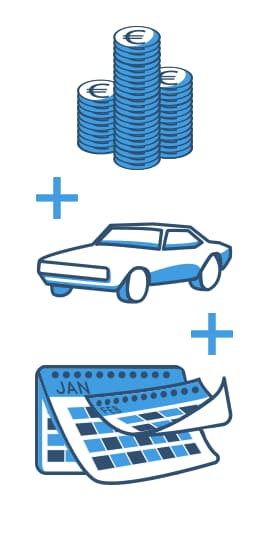
Once a broker has been chosen, the exact path to taking out the loan depends on various factors. The prerequisites for the chosen Swiss loan are determined by the lending institution.
The consumer must provide a number of pieces of information in order to receive a concrete offer:
- What amount should be covered?
- What is the purpose of use?
- Which term is preferred?
Based on this data, the contract terms are determined. The lending institution sets the costs, interest rates and repayment rate. Aspects such as special repayments are also recorded in the contract.
How does taking out a Swiss loan proceed?
With an online application, the process is very similar among different brokers. There may be slight variations in order:
1. Providing personal data
Brokers work with an online form. Consumers enter all relevant data for the loan application there. How long should the term be? What loan amount is needed? You can also select whether the loan should be with or without a credit check. Personal data such as name, marital status and date of birth are then requested. Contact details are important.
2. Income situation
The application for a loan usually asks for the current place of residence. This is important for a Swiss loan. This type of loan requires a permanent residence in Germany. In this context, it must also be stated how long the borrower has been registered at the current place of residence. Further information relates to the housing situation – if there is a partner in the household or the applicant is married or in a partnership, the income of the applicant and their partner is queried. It is rarely possible to successfully complete the application without this information. Another point deals with information about the profession. Which position is held where? How long has the employment relationship existed? Employer contact details can also be relevant.
3. Contact by the loan broker
Once the form is fully completed, it is sent to the broker for an initial review. As soon as the broker has reviewed the request, they contact the applicant. Good brokers work very quickly. Within a few hours or days, an employee contacts the applicant. This may be a phone call or an e-mail. A consultation appointment is usually arranged by e-mail.
During the conversation, it quickly becomes clear whether the broker is acting in the best interest of the borrower. A good broker questions the current financial situation in order to rule out a classic installment loan in Germany. Often the situation is less hopeless than the borrower thinks. If this is the case, the brokers can advise the consumer on a suitable product from the German financial market. In a joint conversation, consumers can find out whether they trust the financial broker. It is important to establish personal contact with mutual understanding. Only in this way can the customer and the broker jointly make a good financial decision.
4. Checking creditworthiness without Schufa
Once it is clarified which conditions are desired for the loan, the broker contacts their partner bank. A reputable broker for Swiss loans is in contact with a wide network of banks. Quick contact and timely processing of loans are thus ensured. The foreign lending institution will request documents that are used to assess the applicant's creditworthiness. This check is intended to minimize the default risk for the banks. Even if it is not a Schufa check: A loan cannot be granted entirely without a creditworthiness check. The review of personal documents is, however, very individual. The actual circumstances are taken into account during the assessment.
5. Signing the contract
If the loan application is approved by the bank, the loan agreement must be signed. The documents are sent to the broker. The broker forwards the documents to the consumer. The documents must in any case be checked carefully. If there are questions, it is important to contact the broker immediately. If the contract terms are accepted, the borrower only has to sign the documents and return them.
What should be noted when signing a Swiss loan?

It is extremely important that the loan documents are fully understood. If questions arise while reading the contract, the broker should definitely be contacted. It does not matter whether entire passages are incomprehensible or just a few words. A single term can already have a relevant legal meaning that determines the basic principle of the entire contract. A small rewording can already change the contract terms. Open questions must therefore be avoided at all costs.
What documents are required for a Swiss loan?
Here too, the requirements can vary slightly from provider to provider. Nevertheless, there are a few documents that are indispensable for a loan application:
- Payslips
- Bank statements
- Identity card or passport
It may be that additional documents are required. For example, if the borrower is a civil servant, an appointment certificate may be requested. If taking out the Swiss loan is urgent for the consumer, all documents should be available as soon as possible. Late submission of documents delays the entire processing. Missing documents bring processing to a standstill until they are submitted. It may also be viewed negatively by the bank if documents are submitted late or not at all. In the worst case, this can lead to rejection of the loan application.
How long does processing a Swiss loan take?

Depending on the provider, several weeks may pass between submitting the application and a final approval. On the one hand, you have to keep in mind that these are international financial transactions. The internal processing required to work with customers from another country can take a few days. In addition, each loan must be assessed individually. Compared to an automated Schufa query, a personal review of the documents is necessary.
How does the identity verification for a Swiss loan work?
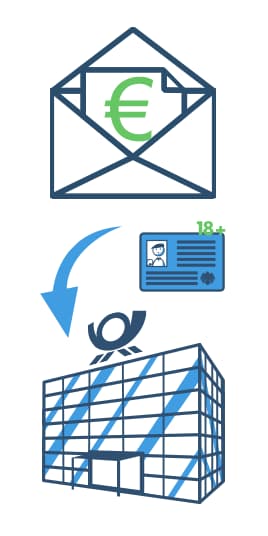
The review of documents requires an identity check by the bank. There is no difference in this area compared to an application at a German local bank. The well-known Postident procedure is used for this. This is used by the bank to ensure the applicant's identity. The Postident procedure is carried out at a Deutsche Post branch. The bank provides the necessary documents for the procedure either directly on the website or the broker sends the documents to the borrower by mail.
The consumer must present the fully completed documents together with a passport or identity card at the post office branch. The applicant's data is entered into a special form by a post employee and confirmed by stamp and signature. The documents are then sent in their original form to the broker or directly to the bank. The post office does not charge fees for processing the documents. The costs for returning them to the broker or bank are usually covered by the bank.
In the Postident special procedure, a post employee brings the documents directly to the applicant. The documents are completed on site at the borrower's home. This procedure is used, for example, if the applicant cannot leave the house for health reasons.
Who can get a Swiss loan? Who is a Swiss loan interesting for?

A Swiss loan is a good alternative for private individuals who have difficulty obtaining a loan in Germany due to a negative Schufa entry. The Swiss loan waives the Schufa inquiry and uses only the current living circumstances to assess creditworthiness. If there were payment problems in the past that resulted in an entry in Schufa, these are not taken into account.
The Schufa check at German financial institutions is often a purely electronic process. As soon as an entry exists, the loan is rejected. The bank does not take the time to find out how this entry came about. This means, for example, that an outstanding payment for a mobile phone contract can lead to rejection. The Swiss loan examines current household incomes and personal circumstances. The following requirements must be met:
- Majority age and legal capacity of the applicant
- Regular income
- Permanent employment relationship
- German citizenship
- Residence in Germany
A Swiss loan can only be applied for by private individuals. During processing, the applicant will be asked whether they suffer from a serious illness. Although this does not need to be confirmed by a medical certificate, it is important to answer truthfully. If it becomes apparent at a later date that false information was provided in the application, this can have costly legal consequences.
The minimum income required for approval is often set at €1,130. However, this amount can change slightly. If the applicant is liable to pay maintenance, the amount is adjusted. The length of employment is another important point. The borrower must have been with their current company for at least one year – some providers require a longer period of employment. In most cases, the loan is secured based on the borrower's income. If there are securities such as insurance or real estate, this can positively influence lending.
Although lending for a Swiss loan is quite flexible, the requirements for the applicant are very strict. This means that some groups of people are often excluded from the outset. If no regular income is available, it is almost impossible to secure a loan. This includes the following groups:
- Unemployed
- Students
- Self-employed
- Recipients of basic social security benefits (Hartz 4)
Pensioners also often find it difficult to apply for a Swiss loan. Financial institutions work with a maximum age for lending. This age limit is between 60 and 65 years with many providers, so pensioners are often excluded.
Swiss loan for German consumers?

German consumers are considered particularly financially stable within Europe. This means that international lending institutions are happy to offer financial products to German citizens. However, the customer must not only be able to prove citizenship, but also have a residence in Germany. On the other hand, residence alone is not sufficient to qualify for an international loan.
To simplify cooperation between German borrowers and foreign lending institutions, financial brokers are an important tool. Consumers can not only use existing contacts, they also save a lot of time and complicated bureaucracy.
Is a Swiss loan possible during personal insolvency?

As a rule, people in personal insolvency cannot take out a loan. This also applies to the Swiss loan. An application with a reputable provider will be rejected immediately. The current financial situation is associated with too high a risk – both for the bank and the consumer. If the possibility of taking out a loan is offered despite personal insolvency, caution should be exercised, as such a lender appears highly unscrupulous.
Swiss loan with collateral?

In principle, a regular income or a minimum income is considered security for a Swiss loan. If this is not available, it becomes difficult to have a loan approved. However, there is often the option of providing collateral. For example, if there is a property, the borrower can have a land charge entered in the land register. If insolvency occurs, the lender has the right to cover the outstanding costs from the proceeds of the sale of the property. Although foreign banks accept collateral more readily than German banks, this is a risky step. If a forced auction becomes necessary, you may be left without financial means.
Definition - Land charge
The land charge is a term from German property law. It secures the creditor's right to claim a property or a property-equivalent right in the event of a debtor's inability to pay. The land charge is typically used as loan security. A classic example is mortgage loans in the context of construction financing.
Costs and terms of the Swiss loan
How high are the costs for a Swiss loan?
Banks are aware that a Swiss loan carries a high risk. Even if the Schufa entry is not relevant for granting the loan, it plays a significant role in cost calculation. A customer with good creditworthiness is less prone to financial problems. The chances that the loan will be repaid at maturity are therefore very good – the risk for the bank is correspondingly low. To hedge this risk, banks charge a higher interest rate in this case.
What should you watch out for with a Swiss loan?
It is worth comparing offers for a Swiss loan from different brokers thoroughly. Not every bank offers good conditions. The costs for the identical loan amount can differ greatly. The total costs for a Swiss loan consist of the following factors:
- Loan amount
- Interest
- Processing fees
- Broker fees
The longer the repayment period, the higher the effective annual interest rate. The loan amount also determines the interest rate. It should be noted that a Swiss loan generally represents a high default risk for the bank. Interest rates are therefore set correspondingly high. If there is an alternative to the Swiss loan, consumers should definitely consider it. To optimize processing time for a Swiss loan, all documents should be submitted completely and on time to the broker or bank. If forms are not completed correctly or are insufficient, they will be returned immediately and processing will be delayed accordingly.
Which contract terms are relevant for a Swiss loan?
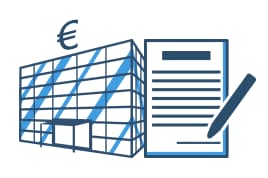
The loan conditions do not differ from a classic bank loan. This means that consumers should not expect unpleasant surprises with a reputable provider. To understand the terms of a loan agreement, these terms should be known:
Nominal interest rate
The nominal interest rate indicates the agreed interest costs. This rate is a debit interest rate that the borrower owes the lending institution. The nominal interest rate for a Swiss loan is designed as a fixed rate. It does not change over the term of the contract. Nominal interest rates do not indicate the total cost of borrowing. If a financial product is advertised only with the nominal interest rate, consumers should be careful to keep the total costs in view.
Effective annual interest rate
The effective annual interest rate is above the nominal interest rate. It integrates the nominal rate and other cost factors such as fees or transaction costs. Based on this value, customers can see the actual costs associated with the loan. The effective annual interest rate also does not change during the contract term.
Repayment
Repayment describes the portion of the loan that is repaid with each installment. The higher the repayment rate, the faster the loan is paid off. The lower the repayment, the longer the contract term.
Special repayment
A contractually agreed special repayment allows the borrower to reduce the loan amount by a one-off payment. No special costs apply. The amount by which a special repayment may be made is recorded in the contract. A special repayment reduces the remaining balance of the loan and thus shortens the loan term.
Prepayment penalty
If the agreed special repayment is exhausted or not stipulated in the contract, the lending institution may charge costs for a prepayment penalty for early repayment. These costs are usually set very high. This makes it relatively expensive, among other things, to repay a loan early. If you have questions about terms in the contract, it is important to contact the broker. A quick search online is often possible. In comprehensive banking lexicons, contractually relevant terms are well explained.
What possible terms are there for Swiss loans?
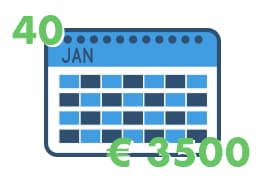
A Swiss loan is granted with a maximum term of 40 months. There are currently no offers on the market that exceed this period. It is also worth noting that many financial institutions only grant a loan amount of up to €3,500. If a higher amount is needed, it may be possible to apply for another Swiss loan from a different financial institution.
Can a Swiss loan be increased?
In a real emergency, it may be necessary to increase an existing loan. A Swiss loan can also sometimes be increased. This is particularly easy if a large part of the outstanding loan amount has already been repaid. If installments have been paid regularly and on time, banks are happy to grant an increase to the loan. If you need to quickly improve your financial leeway, this provides a quick and simple solution. It is not necessary to go through a long and complicated new application process.
Purpose of use for the Swiss loan
Is the Swiss loan purpose-bound?

The reasons for taking out a loan can vary greatly. Foreign lending institutions generally do not care what the customer intends to use the money for. The capital can be used to buy a car, for debt consolidation or to finance a trip. Banks focus on granting the loan to a solvent customer. What the customer plans to do with the money is therefore irrelevant to them.
Swiss loan for car purchases
Buying a car is usually associated with high costs. Many consumers do not have the required capital in cash. A loan is the only way to finance the vehicle. If there is even a Schufa entry, a Swiss loan offers a good alternative. Consumers can finance the vehicle without involving the car dealer. After approval and disbursement of the loan amount, the purchase can be settled through the current account.
Using a Swiss loan for debt consolidation
Ongoing loans can be consolidated if necessary. This means that the existing loan is paid off and replaced by a new one. This approach is useful if the new loan offers significantly better conditions. A falling key interest rate is a reason for many to terminate old loan agreements.

Definition - Key interest rate
The key interest rate is set by the European Central Bank. It serves as the trading rate between banks within the European Union and commercial banks. The lower the key interest rate, the lower the costs for the banks. These savings are passed on to consumers to stimulate financial growth within the EU. Loan interest rates are oriented to the key interest rate. If a loan was taken out at a time of a high key interest rate, the ongoing interest costs are correspondingly high. Debt consolidation can save the borrower thousands of euros a year.
Using a Swiss loan to buy real estate

A classic construction financing uses a mortgage. Mortgages in Germany are granted for up to 80% of the total financing. Those who have no equity beyond that have to resort to alternatives. German banks offer the possibility of full financing – however, these are very expensive. High fees and a high interest rate make full financing unaffordable for many home builders. A Swiss loan can cost-effectively top up the gap to equity. In combination with the domestic mortgage, the dream of owning a home can be realized.
Repaying an overdraft with a Swiss loan
Consumers repeatedly find themselves unable to repay an existing overdraft. The high monthly costs are a serious burden that can develop into a major problem over time. Repaying an overdraft is in many cases the best solution. In principle, a Swiss loan can be used for this. However, this is hardly advisable: the high interest rates are hardly more favorable compared to overdraft costs. If no other borrowing option is available, it makes sense to keep the existing overdraft. Consolidating to a Swiss loan does not provide a financial advantage.
Advantages and disadvantages of the Swiss loan
What advantages does the Swiss loan have?
A Swiss loan is a lifeline for people in a financial emergency. If you need to quickly increase your financial leeway, a Swiss loan allows you to bypass the high requirements of German banks. In Germany, a single negative entry in Schufa is often enough to reject a loan application. The borrower's current circumstances are not taken into account.
Swiss loans rely on a more flexible starting point for lending. In countries like Switzerland there is no institution like Schufa – accordingly, no inquiry into past burdens is made. Loans can also be used for any purpose. It is not necessary to explain what the money will be used for.
Good brokers have a Swiss loan as a contingency. Increasing existing loans is easy to implement. If an unexpected financial bottleneck occurs, a quick solution is not far away.
Swiss loan: advantages at a glance:
- Loan without Schufa
- No specification of purpose of use required
- Increase possible
What disadvantages does the Swiss loan have?
A clear disadvantage is the cost structure. Compared to a classic bank loan with a Schufa inquiry, a Swiss loan is quite expensive. The high costs are due to the high interest rates. Those who decide to work with a broker incur additional costs. At the same time, however, a broker saves time and therefore money.
Unfortunately, the lending system for a Swiss loan also excludes a number of groups of people. A regular income is a prerequisite for approval. Further requirements often require a period of employment of at least twelve months. The term limited to 40 months and the €3,500 loan cap are further points that limit the possibilities of the Swiss loan.
Swiss loan: disadvantages at a glance:
- High costs
- Max. 40 months term
- Max. €3,500 loan
What alternatives are there to the Swiss loan?

Even with a negative Schufa entry, it is possible to take out a regular loan in Germany. Banks mostly operate according to a preset filtering system that can quickly reject potentially good applicants. The Schufa report is not examined in detail. The so-called Schufa score is created from a collection of data that does not always allow conclusions that you actually have poor creditworthiness. If you find yourself in such a situation, it is advisable to ask the bank for a personal consultation. In particular, the local bank is generally willing to grant a loan to people with moderate creditworthiness.
If the consumer is able to convince the bank that their current financial situation is sufficiently stable, there is usually nothing standing in the way of taking out a loan. Depending on the bank's goodwill, the conditions for the loan are somewhat worse than for a customer with good creditworthiness. Therefore, it is worth contacting several banks and comparing the individual offers.