Unsecured loan and blanko loans
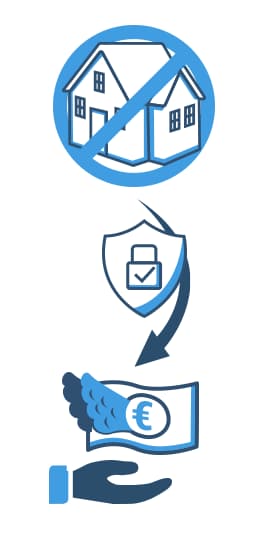
An unsecured loan, also called a blanko loan or personal loan, can be simply described as a loan that is granted without being secured by a tangible collateral such as a house or other assets. There are also other types of loans that fall under the category of unsecured loans. If only part of the loan amount is provided as collateral, the unsecured portion of the total amount is referred to as the blank portion.
Furthermore, there are forms of blanko loans where collateral is provided but does not meet typical bank standards. This can include, for example, guaranties provided by private individuals, usually from family or close friends, or a wage assignment (assignment of salary), which usually applies until the loan is fully repaid. Generally, the borrower should have a positive credit rating (creditworthiness), but there are exceptions, which will be explained later.
Unsecured loans for private customers
The probably most common blanko loan in Germany is the overdraft facility, commonly called a “dispo” (disposition credit). Here the bank grants the customer an overdraft limit on the current account without requiring collateral. The security lies in the regular income of the last three to six months and usually in a permanent employment relationship. The overdraft is the most convenient credit, but at the same time also the most expensive loan type. The interest rates are relatively high, so the overdraft should always be repaid as quickly as possible.
Most customers today receive a credit card from their bank in addition to an overdraft facility, which also comes with a credit limit. This is also an unsecured loan, since credit cards require only the customer’s creditworthiness as security. Credit cards are especially popular abroad; for domestic use they were often considered too expensive in the past due to high interest rates, but the prevalence and integration of credit cards in everyday life have increased significantly in recent years.
Also very common are personal loans or installment loans, which are a form of unsecured loan. Here the customer receives a loan typically amounting to around three months’ salary, usually upon presentation of an employment contract and positive credit rating. Such installment loans are often granted to fulfill short-term wishes and therefore made available quickly. The term of such loans is generally relatively short as well. Such a loan is also particularly suitable, for example, to repay an overdraft and thus avoid high costs (debt consolidation).
The rental guarantee (Mietaval) is also a blanko loan. In this case, a bank issues a guarantee on behalf of its customer to cover the security deposit for a new apartment. Moving is often expensive and can create problems for people who also have to provide a deposit, which is usually several months’ rent when furnishing a residence.
In Germany, more and more people are dealing with negative Schufa entries, which always lead to a deterioration in creditworthiness — and poor creditworthiness is the most common reason for denial of an unsecured loan. However, most banks and lenders maintain branches abroad that offer their services online. Such banks are not subject to the strict German legal requirements for lending when approving unsecured loans, so usually an employment contract and the last three to six monthly salary payments are sufficient to obtain an unsecured loan. The interest rate is usually slightly higher than at a German branch bank, which can be explained by the increased risk for the bank. Nevertheless, customers have the opportunity this way to participate in normal economic life again without constantly having to provide advance payments.
Blanko loans for business customers and companies
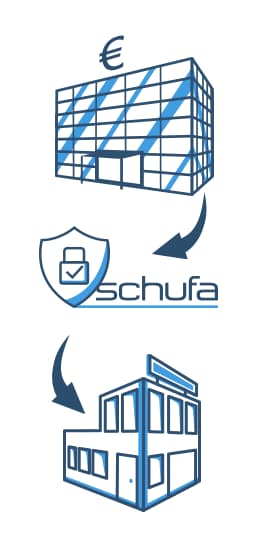
Most businesses and companies occasionally need a loan to finance day-to-day operations, for example when long-term projects have to be executed. In such cases the bank provides the customer (borrower) with an unsecured loan without requiring the business equipment as collateral. Typically, the lender requires the business customer to process all payment transactions through the loan account in order to assess actual creditworthiness. If the bank or lending institution has legitimate doubts about the reliability of the customer, the loan can be terminated immediately, which is understandable and also in the interest of other customers. In such a case the unsecured loan must be repaid immediately and not only at the end of the originally agreed term.
For business customers as well, in Germany the granting of such a loan is usually associated with a check with Schufa or another credit agency to ensure the creditworthiness of the customer or the company. In those cases it is possible to open a business account online at a bank or lending institution based abroad. There too the lender usually requires that all business transactions be conducted through the respective account to keep an overview of the borrower’s actual activities and thus the reliability of their business, and to be able to reclaim the loan if necessary. The terms and requirements are otherwise comparable to those at a branch bank, although the interest rate may be slightly higher. After all: some startup companies would not exist if it were not possible to circumvent the often very strict German regulations without having to turn to dubious lenders.
Blanko loans via building savings loans
In Germany the building society loan (Bauspardarlehen), also called building savings loan, is very common. Most major investments such as buying an apartment or a house or an extensive renovation are handled via such building savings contracts, which many people have. Germany has its own Building Savings Banks Act (Bausparkassengesetz), which in § 7A paragraph 4 regulates when and to what extent blanko loans may be granted in such a context. For a building society loan the maximum amount is set at EUR 10,000: up to this amount the building society can waive a mortgage-type collateral (loan security) because the effort of such a measure is considerable and usually also incurs costs.
Interim loans (bridge financing), for example until another loan or financing becomes available, can also be granted as unsecured loans up to EUR 5,000. If the borrower signs a negative declaration, a negative loan (Negativdarlehen) between EUR 10,000 and EUR 15,000 can also be granted without mortgage-type collateral in the context of a building society loan, which corresponds to an unsecured loan.
With a negative declaration or negative clause the borrower undertakes not to provide any future lender with collateral. This is intended to keep the lender’s risk as close as possible to the level at the time of contract conclusion.
In addition to pure house construction, there are also modernization measures that require a lot of money. By law, since 2009 building societies may grant a corresponding unsecured loan of up to EUR 30,000 for such cases. For all these cases it applies that the respective building savings contracts must exist and certain deadlines must be observed. Further details on blanko loans from building societies can be found in the mentioned law.
Comparison of unsecured loans
An unsecured loan is not necessarily the same as another unsecured loan, and perhaps you only need the blank portion.
Whether it’s for mortgage financing, debt consolidation, or financing a major purchase — for any loan you should compare different lenders and offers, and the unsecured loan is no exception. It initially depends entirely on the purpose for which the loan, in this case the unsecured loan, is to be taken out. If it’s about mortgage financing or financing a property purchase, building societies are potential lenders. With building savings, an unsecured loan is usually an option. By comparing building societies and carefully reviewing the offered conditions, differences between offers can often be identified that can be advantageous.
When taking out an overdraft, the range of offers from banks and lending institutions is even larger and more confusing. Comparing individual offers, they sometimes differ in the interest rate and the permitted credit limit, to name just a few features. It strongly depends on the borrower’s personal circumstances and priorities. Therefore, even after a comparison, no general statement can be made about which loan is best. It always depends on the borrower’s personal needs. Consider how much on average remains from your income after all expenses. Also bear in mind that you should continue to keep some money in reserve in case of unexpected expenses.