The right loan for you and your life
Anyone looking for a suitable loan will be inundated with information. It's easy to lose track. Which type of loan is the right one? What should be considered when choosing a loan? And how are loan installments composed? The following answers these and many other questions about loans. It doesn't matter whether a loan is sought for a car or for a property — with the right information it's easy to find a first-class financial product.

What types of loans are there?
The first question marks often appear when faced with the wide range of loan types. Some are named in an easily understandable way, while others are less clear. Moreover, many consumers do not know that each loan has a number of specifics. Therefore, not every loan type is the best choice for every purpose.
Among the most important loan types for private customers are:
- Overdraft (Dispokredit)
- Installment loan (Ratenkredit)
- Mortgage/Construction loan (Baukredit)
- Loan without Schufa
What is an overdraft (Dispokredit)?

The overdraft is granted via the house bank and the current account used.
It is a one-time approved credit limit that the account holder can use freely. The amount of the overdraft depends on factors such as income and regular expenses. As a rule, the overdraft can be requested immediately when opening the current account. The bank often grants a credit limit that lies within about three times the salary. If the credit is not used, no costs are incurred. Only when the overdraft is used must the previously agreed interest be paid.
Note!
The overdraft has a high potential to trap consumers in a debt loop. The credit is often used to cover unexpected expenses because the money is immediately available without waiting time. The credit amount must be repaid at least in part by the next salary. Since the salary is processed through the same account, the outstanding amount is immediately reduced. Consequently, less capital is available for the following month, which leads to the overdraft being used again.
What is an installment loan (Ratenkredit)?
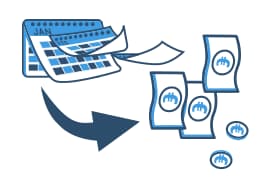
The classic loan is usually provided as an installment loan. Consumers can use this loan for a variety of purposes.
Although a purpose is asked for when approving the loan, the consumer is not strictly bound to use the money for the stated purpose. This makes the installment loan a flexible financial product suitable for buying a kitchen as well as financing a training course. The loan application for an installment loan can be submitted at a branch bank as well as via various online platforms and direct banks.
The loan amount is repaid over a fixed term. The amount can range from a few hundred euros to more than €50,000.
What is a mortgage/construction loan (Baukredit)?
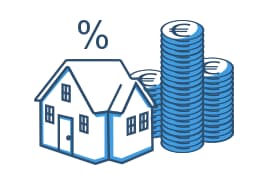
A construction loan is always granted in the context of real estate financing — that is, for building or buying a property. It is also possible to use a construction loan for renovation and refurbishment of existing properties.
Construction loans are available in various forms. The different loan types make it possible to secure financing that perfectly fits individual financial circumstances:
- Mortgage
- Forward loan
- Subsidized loans
The classic home financing is implemented with a mortgage. The financed house or the purchased land is provided as collateral. Depending on the structure of the loan, the collateral may be provided in different ways — in general it serves to minimize the risk of possible insolvency of the borrower.
A forward loan is especially relevant for refinancing or as a follow-up loan. The forward loan secures favorable interest conditions up to 36 months before the actual loan is taken. This loan offer is a good choice if you plan to refinance your existing home loan in the near future.
Tip
Regardless of the contractually agreed term of a loan, consumers have the option to terminate the loan contract after 10 years. A follow-up financing can be used for this, or the outstanding loan can be settled with a cash payment. In both cases additional costs arise. The amount of these costs is also contractually regulated.
A subsidized loan uses state benefits for loan granting. The granting of a subsidized loan is decided at the responsible central office of the respective federal state. Consumers should seek advice to inquire about individual possibilities.
Loan without Schufa

A loan without Schufa is essentially a classic installment loan. However, the loan granting differs enormously in direct comparison. A typical loan application includes a creditworthiness check. The lending institution conducts a credit check to determine the borrower's risk profile. In the course of this credit check, various documents are required and the bank requests a Schufa report.
The Schufa report shows the lender a number of pieces of information:
- Personal data (address, name, date of birth, etc.)
- Existing current accounts
- Active loans
- Outstanding payments
- Schufa score
The Schufa score is a value determined by Schufa that gives a rough overview of a person's creditworthiness. The higher the value, the better the assessment of creditworthiness.
If you already know before your loan application that you cannot meet the Schufa conditions for the loan, you can consider a loan without Schufa. Here the inquiry is omitted and consumers can secure the needed money despite negative Schufa entries. However, very high loan costs apply. Typically, the loan amount for such an installment loan without Schufa is also limited.
Which special types of loans are offered?
For certain groups of people there are loan types that are tied to specific conditions. They are mostly designed for people who do not meet the usual requirements for a classic loan inquiry:
- Student loan
- Apprentice loan (Azubi Kredit)
- Startup/Founder's loan
- Civil servant loan (Beamtendarlehen)
When choosing the right loan, consumers should definitely seek comprehensive advice. Good advice can take borrowers' wishes into account and recommend a financial product that secures many advantages.

Securing a loan via credit cards
A consumer loan that is particularly suitable for bridging short-term financial bottlenecks can be used via a credit card. It is quite easy to apply for a credit card with a significant credit limit. This can often be handled online. Of course, it is also possible to obtain the credit card through the bank.
How much loan can I get?
The conditions for the loan are recorded in the loan agreement. In addition to the interest, term and installment payments, the loan amount is also specified. The amount granted depends on several factors:
- Loan type
- Intended use
- Income
- Term

Installment loan offers are limited to a maximum amount. This is set by the bank and can therefore range between €25,000 and more than €50,000. Borrowers can obtain loan amounts of all kinds for home financing. Here amounts between €100,000 and several million are possible.
Note
A mortgage does not cover more than 80% of the total construction sum. Ideally, the consumer can provide the remaining 20% as equity. However, it is also possible to finance the remaining payment through other loan forms.
How are the monthly loan installments composed?
For the question of the possible loan amount, the monthly installment is also decisive. The borrowed money is repaid through the so-called repayment (tilgung). With each installment, a part of the borrowed sum is covered each month. The monthly installment consists of the repayment and the additional costs of the loan. The additional costs include these components:
- Interest
- Fees
- Commission payments
Is there a difference between repayment rates and monthly installments?
Monthly installments are a combination of various partial payments, which also include the repayment. However, repayment can take many different forms. The conditions are recorded in the loan agreement.

Types of repayment at a glance
- An installment repayment (Ratentilgung) extends over the entire term of the loan. A fixed amount covers the outstanding loan each month.
- A single repayment (Einmaltilgung) is due only at the end of the loan term and the complete amount is settled with a capital payment — common for commercial projects.
- Scheduled repayments can set a fixed payment rhythm, for example every three months. The repayment amount is also fixed.
- It is possible to make special repayments (Sondertilgungen) independently of the contractual repayment agreement. If a special repayment is provided for in the contract, a repayment independent of the contract can be made without incurring special costs.
- The annuity repayment is used most often. It is spread over the entire payment period and the monthly installments consist of the agreed repayment portion and the interest charged.
Which other factors influence the installment amount?

The actual costs for a loan and thus the amount of the monthly installment are determined by a total of four main components:
- Loan amount
- Type of repayment
- Interest
- Term
The higher the loan amount taken, the higher the monthly installments. The term is also decisive. A longer term often results in a higher interest burden.
This in turn increases the total costs — but not necessarily the monthly installments. Comprehensive advice is a good option if you are unsure about what installment level you can manage.
Tip
With a loan calculator you can get a quick overview of current loan offers. The loan calculator compares products from branch and direct banks. Simply enter the important key data, such as loan amount, term and type of repayment, and a list of loan options is displayed immediately. Be sure to ensure that the interest figures state the effective annual interest rate and not the nominal interest rate. The nominal rate refers only to the loan amount and not the total costs of the loan.
Are payment holidays possible?

Regardless of the amount of the monthly loan installment, an unexpected financial shortfall can always occur. For example, income may cease due to unemployment. For such a special case it is possible to negotiate a payment holiday with the lender. Banks grant a payment holiday of up to three months.
Such a payment holiday is best agreed contractually. Then it can be used on request without reapplying. Of course, one must bear in mind that the pause is associated with high costs — the bank charges significant fees for the deferral of payments.
If the possibility of a payment holiday is not contractually stipulated for the mortgage or an installment loan, you can still contact a bank advisor to arrange the possibility. Never simply miss a payment without adequately informing the bank. This can lead to termination of the loan in the worst case, which entails enormous extra costs and destroys creditworthiness for a long time.
What terms are there for loans?

Simple installment loans can already be taken out with a term of six months. Loans with a shorter term are rarely possible. Exceptions are the overdraft and borrowing via a credit card. It is possible to repay the loan amount without special repayment costs within four weeks.
For home financing the term can be adjusted individually. A smaller loan amount for buying a property is often repaid within five years. However, loan terms of 10 to 15 years are common for a construction loan. Some financings work with terms of up to 25 years. Moreover, it is hardly possible to secure a loan with the initial financing alone. If a longer financing period is necessary, options for follow-up financing are available. A loan comparison shows how interest costs change with the term.
Note
Ideally, home financing should be completed by retirement age. For example, if you buy a house at the age of 35, you should plan the total financing for a maximum period of 32 years.
Bank or loan broker - which is better?
A loan comparison quickly shows that there are big differences between individual offers. If you want to compare individual loan offers yourself, it is easy to lose track. This begins with the fact that it is not always possible to view all current offers on the website or even to ask in the branch without a long consultation.
A loan inquiry via a loan broker is uncomplicated and fast. Here it is not about selling a product that benefits the broker. The focus is on securing a loan that offers the consumer the best advantages.
Online loan calculators make life easier for customers. Only a few basic key data need to be entered to get a good overview of current loan offers. It is then easy to determine which lending institution a specific inquiry should be sent to.
\

Attention
In the context of a loan inquiry, consumers should make sure that the Schufa inquiry for the credit check is only recorded as an information request by the lending institution. A full inquiry is visible to subsequent lending institutions for up to 10 days. This can negatively affect creditworthiness if the lending institution assumes that several inquiries have already been rejected.
Which documents do I need for the loan?

Anyone who submits a loan application must provide a number of documents. It does not matter whether the application is processed online or at the bank. The loan inquiry proceeds in most cases identically, regardless of the chosen lender. The path to the desired loan naturally begins with choosing the loan type and the financial institution. Once this decision has been made, you contact the lender.
For a quick loan, processing time is extremely short. Within a few hours after the initial inquiry someone will contact the borrower. This can happen by phone, email or via live chat. The loan inquiry is processed as quickly as possible to secure the desired loan even for urgent cases.
For an initial assessment the basic key data are requested:
- Loan amount
- Loan type
- Income and income ratio
The borrower must also give consent for a comprehensive credit check to be carried out. Once these steps are completed, an initial response regarding the loan decision follows. If it is immediately apparent that the desired loan amount cannot be financed with the income, an alternative amount is proposed. If the customer accepts this, the relevant documents must be submitted:
- Proof of income – payslips, bank statements
- Proof of identity
- Authorization for the credit check
In special cases further documents are necessary, such as a certificate of enrollment or proof of residence.
Proof of identity must be provided in certified form. The PostIdent procedure is common for this. The identity document (ID card, passport, driving license) is verified at a post office branch and a PostIdent confirmation is issued. Some providers now also work with video identification (VideoIdent). Here the applicant's identity is confirmed online via video chat.
Tip
To process a loan application as quickly and smoothly as possible, the documents should be submitted complete and correct. A missing or incorrect document can unnecessarily delay the entire loan application process.
Can I take out a loan together with others?

It is not uncommon for partners to take out loans together. This is especially seen in home financing. Statistics show that around 20% of all loans are applied for by couples and spouses. One reason is that many banks require both partners' signatures for the loan. Although it is not necessary to apply for a loan jointly, this approach can offer some advantages.
- Joint loan application improves creditworthiness. The better the credit rating by the bank, the better the possible interest rate. This applies not only to a mortgage but also to a car loan or a classic installment loan.
- The loan amount can also be increased. The combined income allows couples to finance a higher loan.
- If one partner's income fails, the entire loan is not automatically at risk. With proper planning, an unexpected period of unemployment can be covered for some time by the second income without the installments falling behind.
A joint loan application should not be confused with a guarantee (bürgschaft). A guarantee is a security that a bank can require.
How do guarantees (sureties) work for a loan?
If the borrower's creditworthiness is insufficient, a number of securities can be provided. In addition to tangible securities and assignment securities, a guarantee is an option. If it happens that the borrower can no longer make repayments, the lending institution turns to the guarantor. The guarantor signs in the loan agreement that they will cover outstanding payments with their private assets.
\

It should be noted that the bank must initiate a number of steps before the guarantor's finances can be accessed. Among other things, it must be proven that the lending institution has exhausted all legally possible ways to obtain the money from the borrower. The borrower must then officially be in insolvency. The costs outstanding after the insolvency proceedings can then be transferred to and claimed from the guarantor. Guarantees are possible for the granting of loans of all kinds.
Which insurances make sense for a loan?

The repayment period of a classic consumer loan is often between 5 and 7 years. The agreed installment payments are due over the entire period. Installments are initially structured so that the borrower can afford the payments. Lenders use an individual risk assessment for this and only grant loans if repayment is very likely. But even the best risk assessment cannot foresee the future. Unemployment, uninsured incapacity for work, or a financial tragedy of another kind can mean that you are no longer able to cover the loan costs. With such contingencies in mind, lenders offer special loan insurance. But what exactly is behind this and how sensible are these insurances for the loan?
What exactly is loan insurance?
The policy insures a possible loan default. The insurance protects the borrower (and the bank) from the loan not being repaid. There are several insured events that can be covered by a suitable policy:
- Unemployment
- Occupational disability
- Death
If the insured event occurs, the insurance takes over the remaining outstanding debt. If payments are missed for an uninsured reason, the policy does not pay out — for example, if the borrower has overextended themselves due to their own fault with other debts and can no longer meet their obligations.
\

What does loan insurance cost?

What premiums are charged for the insurance depends on several factors. Generally, the rate is based on the loan amount and thus on the risk to be insured. In addition, the age of the insured person and the type of loan also play a role.
It is common to pay the insurance costs as a one-time payment at the start of the loan. When a loan is applied for, the extra costs can be added to the loan amount. Thus the borrower repays the insurance costs with the monthly installments.
Who is loan insurance suitable for?
Anyone who is not sufficiently covered outside of loan insurance should consider taking out a policy. Many consumers are already covered by disability insurance or a term life insurance policy.
These policies cover two of the three possible insured events.
Attention
Be sure to read the small print when taking out loan insurance. When comparing individual offers, you can see that many policies only pay out under very specific conditions. For example, costs are often covered only from a certain remaining sum. Also, unemployment caused by the insured's own fault is usually not covered.
Individuals without immediate family members may dispense with death coverage. However, it is generally sensible to insure against incapacity for work, even outside a loan contract. Some lenders accept term life insurance as collateral and in this case it is an indispensable part of the loan agreement. If the life insurance is paid out, the money is used for repayment.
Tip
If life insurance is taken out independently of the loan, the beneficiaries receive the entire policy sum at the time of death for free disposal. This provides flexible financial leeway after the death.
When will I not get a loan?
The reasons for a loan refusal are varied. On the one hand, there are legal framework conditions that must be met. A loan can only be granted to persons who are of legal age and legally competent.
On the other hand, banks work with various basic requirements. These can differ from bank to bank. However, there are a number of points that can be relevant for a successful application:
- Residence must be in Germany
- Permanent employment for more than 12 months
- Existing current account
If the formal conditions are met, the credit check is decisive. With or without a Schufa report, the generated risk profile must be acceptable to the bank. If the default risk for the loan is assessed as too high, the chances of approval are slim.
If you are unsure which loan possibilities exist with your income, you can use a loan calculator to calculate the expected installments. If you have enough money in your account each month to pay these installments, the desired amount can often be obtained.
Note
For certain groups of people lending is quite complicated. This includes students or pensioners, for example. The self-employed are also affected. Even if a steady income can be shown, it is often not secured by an employment contract — accordingly it is considered very risky.
Are there solutions if the bank refuses me a loan?
Consumers often assume that a financial institution is the only way to take out a loan. However, the market offers other possibilities to secure a loan on fair terms.
Attention
In principle, you should refrain from taking out a loan if the funds needed for repayment are not secured. If you are already in a financial bottleneck, you can rarely alleviate it by taking out another loan. In the worst case the entire existence is threatened and personal bankruptcy is the last resort.
If it is necessary to secure a loan but financial institutions are not an option, you should look at the following loan options:
- Employer loan
- Private loan
- Crowdfunding
Small and large companies are very active in the area of employer loans. Companies use this tool to retain qualified employees. The loan granting is handled internally and is often not as demanding as that of banks. In addition, the interest for employer loans is usually below the general market interest rate. As an employee you can make a considerable saving on the annual interest — this must be taxed under certain circumstances. For large amounts it is worth consulting a tax advisor.
A private loan can be provided within the family or among acquaintances. Both borrower and lender must be aware that a private loan can lead to unwanted disputes. Therefore, it is advisable to use a private loan agreement for a private loan. This specifies the individual conditions for the private loan:
- Net loan amount
- Nominal interest rate
- Annual percentage rate
- Term
- Etc.
It is possible to grant the loan without an interest rate. Even in this case a contract is the best choice. If the lender uses the loan to secure a regular income, this must be reported and taxed as such.
Particularly interesting for founders is so-called crowdfunding. Here the loan is obtained via an intermediary platform. Private investors provide the required loans, for example to finance a start-up. In return, investors receive not only interest but also profit distributions.
What if I can no longer pay my loan installments?
The reasons for missed loan payments are varied. A costly car repair or a broken refrigerator can already mean a few hundred euros on the bill, making a loan payment impossible. Here you must react quickly and correctly to avoid bigger trouble.\

Notify the bank

If it is foreseeable that the next installment cannot be paid on time, do not bury your head in the sand. The bank is not interested in making life difficult for the customer. If the financial institution is informed in time that there will be a payment shortfall, it is possible to find a solution together.
For the bank, it is primarily relevant whether the payment default is temporary or permanent. If the bottleneck is limited in time, there is the possibility to adapt the loan agreement to the current situation.
One option is to defer the installments. Here payment of the loan installments is suspended for an agreed period. Installments can also be reduced for a certain period. In exceptional cases a permanent reduction of installments is even conceivable. You should consult your bank to find a solution that is advantageous for all parties. After all, a payment default is also annoying for the bank, which is reluctant to take legal action to obtain the installments.
Prevent reminder fees
If you contact the bank too late or not at all, you will automatically be put into the dunning procedure. Although the bank merely sends standardized letters here, an official reminder incurs high costs. How high they are varies by bank.
Tip
The costs for a dunning procedure are usually legally regulated. However, some providers try to exploit consumers' ignorance and tack on high costs. Some court rulings state that reminder costs may only cover the actual costs incurred by the bank due to the payment delay — interest, postage costs, etc. If you feel you are being charged unfairly high reminder fees, you should contact the consumer advice center.
Complete payment default — what then?
In the worst case the desired loan becomes an absolute nightmare if you are no longer able to cover the monthly installments. If it is foreseeable that the financial situation is so bad that repayment is no longer possible, the bank can proceed in different ways.
Termination of the loan is the last resort. If the loan is lawfully terminated by the financial institution, the entire loan amount becomes due in a lump sum. The costs then cover not only the loan amount, interest and fees but also high special payments.
Since termination occurred only because the borrower was unable to make repayments, one cannot expect the capital to be available at the time of termination. But in order to take further steps, such as accessing pledged collateral, the loan must first be officially ended by the bank.
Depending on the collateral, the next step is either easy to carry out or not. For example, in the case of a car loan it can happen quickly that the car is confiscated by the bank. The bank sells the car and uses the proceeds to cover the existing costs. Remaining debts are still claimed by the bank.
For a mortgage, where the collateral is the property, the process is somewhat more complicated. The type of land register entry determines when the bank has a claim to the property. If it is registered as the first creditor, the proceeds of a forced sale are first applied to the bank. Other creditors are served depending on their rank in the land register.
Note
The forced sale of a property does not automatically lead to personal bankruptcy. It is quite possible to satisfy creditors through the sale without leaving outstanding debts. Wage garnishment or even a full insolvency petition can thus be avoided.
When can a bank terminate the loan?
If there is a delay in installment payments, a bank cannot immediately terminate the loan agreement. In a first step it is only possible to charge reminder fees. For a lawful termination special circumstances must be given:
- Under §498 des Bürgerlichen Gesetzbuches the lender can initiate termination of the loan agreement if the borrower is in arrears with at least two consecutive installments or is in arrears by 5% of the outstanding amount.
- If the loan term is less than three years, the arrears must amount to at least 10% of the outstanding total.\

Termination cannot be declared with immediate effect. The lending institution must grant the borrower a period of two weeks to pay the outstanding amount. The letter must inform the consumer that in the event of non-payment the loan agreement will be terminated and the entire remaining debt will be due immediately.
Refinancing as a lifesaving option
After a loan term of 10 years it is possible to refinance the loan. This means taking out a new loan on better terms and using it to repay the old one. Ideally, this reduces total costs and lowers the monthly installment burden. This is usually possible when the original loan was taken out during times of high interest rates. The high interest burden can amount to several thousand euros per year in some cases.
Attention
Refinancing a loan only makes sense if no high additional costs are incurred for early repayment. Contractual possibilities for special repayments are precisely regulated. It is worth consulting a specialist to secure the best deal.
Should you refinance your overdraft facility?

Refinancing can also be worthwhile for an overdraft. If you are stuck in a debt cycle and slip into the overdraft again every month, you can save a lot of money by refinancing with an installment loan and effectively reduce the debt.
Interest rates for an overdraft are extremely high. If you cannot repay the entire loan amount within a month, you must bear additional costs. Over time, a sizable sum accumulates that merely keeps the overdraft running.
If the outstanding loan amount is covered by an installment loan, the monthly installment is not only cheaper but also easier to calculate. Ideally, when the installment loan is paid off, you are debt-free.
In general you should avoid using the overdraft. It is a last resort in absolute emergencies. It is also possible to have the overdraft removed from your account.
How do I get my desired loan?
The path to the perfect loan is easier than you might think. The extensive range of loan products of all kinds has many advantages to offer. Whether for buying a car or financing a renovation, there is certainly a suitable product.
\

The desired loan is perfectly tailored to your financial situation. Before comparing loans, consumers should get an overview of their own finances. What monthly installment burden can be covered? Can the installments also be paid in case of unemployment or a serious illness for a short period?
If you know your financial possibilities, you will get a desired loan that convinces on all levels:
- Loan amount
- Purpose
- Interest rate
- Term
- Conditions
With a loan calculator you can quickly compare hundreds of offers. At a glance you can see which banks and financial institutions are suitable for your individual requirements. Then contact the chosen bank and discuss the options. After that, just submit the required documents and wait for the bank's response.
An approved loan will be credited to the account within a few days and up to four weeks. An instant loan is the fastest option. For comprehensive financing plans, implementation can take a little longer.
About Maxda
Maxda is one of the leading financial service providers in Germany and offers its customers both loans and real estate financing. The entire focus is on private customers in order to competently and reliably support them in the area of financial services.
Maxda continuously strives to tailor offers to the needs of customers. Attractive conditions and high quality advice for all products and services are paramount. Further advantages for the customer arise because Maxda can draw on many years of experience and considers itself an independent service provider that works with leading German and European banks and financial companies.
Therefore Maxda can draw from a wide range of options at all times. As a specialist, Maxda not only offers loans with Schufa checks but also without. The loans can be used as general-purpose loans for any purpose. In addition to installment loans, civil servant loans and loans without Schufa, Maxda also offers mortgage loans. For especially urgent needs, Maxda ensures immediate and 100% payout of the loan amount. This can be done by post or by bank transfer. This ensures financial independence quickly and without bureaucracy. Even in seemingly hopeless cases, Maxda takes customers seriously and does not shy away from taking on these challenges.